Tuesday, October 12, 2010

Salvation and Judgment


Like Jude, I have much that I wish to say about the salvation that we share; I think several posts will follow on this topic. I begin here with a re-post from October 2007 that sets out some of the fundamental notions underlying my thoughts -- and, I hope, the thoughts of the church -- on our great salvation.


I’ve always thought of hellfire-and-damnation preachers much like I think of grits and sweet, iced tea – as home grown Southern commodities. Oh, I suppose you can get all of then north of the Mason-Dixon line, but there they would be only dim shadows of the full reality we have here in Dixie. Here we have the real Brother Love.

Hot August night and when you’d almost bet
you can hear yourself sweat he walks in.
Eyes black as coal and when he lifts his face
every ear in the place is on him.
Starting soft and slow like a small earthquake,
but when he lets go, half the valley shakes.

Cause it’s Love, Brother Love,
say Brother Love’s traveling salvation show.
Pack up the babies and bring the old ladies
cause everyone goes, everyone knows it’s Brother Love’s show.

-- Neil Diamond (adapted)

I like grits: butter, salt, pepper: please, no sugar – that’s for Yankees who even put it in their cornbread! And sweet tea? Well, that’s the house wine of the South. But, other than as cultural icons – kind of like Elvis – I’m not so fond of hellfire-and-damnation preachers. They tell you with tears in their eyes and a catch in their voice just how much God loves you. Then a moment later – sometimes without missing a single breath – they stride across the stage and with red face and popping veins terrorize you with the eternal fires of hell where the flames are never quenched and the worm never dies and where God is only too pleased to send you forever if you don’t repent this very night. And this always brings the shouts of Amen! from the crowds. “Are you saved, brothers and sisters? If you leave this place and on the way home die in a terrible car wreck, do you know where you’d spend eternity?”

I’ve heard my share of these preachers. They weren’t part of my spiritual traditional directly, but I’ve heard them often enough. And I’ve known a few – genuinely good men worthy of respect. Even so, I don’t care for their preaching. And it’s not just a matter of style; I don’t care for the style, but that’s just personal preference and not important at all. It’s not the simple and unsophisticated faith they typically express that bothers me; after all, God has not chosen to use the wisdom of the world for his glory, but rather the foolishness of the cross proclaimed with simplicity and power – the very wisdom of God. No, it’s their theology; that’s the problem. I find their vision of God more than a little confusing and frankly, disturbing. God loves me and God is willing to torture me forever in the fires of hell. These two notions need a lot more reconciliation than their sermons usually provide, and really than their theology provides. And the incessant question, “Are you saved?” makes me wonder: In their theology am I being saved by God, for God, or from God? It truly begins to sound like the latter. God, who is good, is disposed – by his very goodness – to send me, wretched sinner that I am, to eternal punishment. But Jesus interposes himself between my sinfulness and God’s righteous wrath to save me from God’s vengeance. Jesus saves me from God. Can that be right? Is that really the biblical image of salvation?

Such preaching always leaves me feeling vaguely disquieted, even a bit irritated. It’s taken me a while to realize why, but I think I understand now. These preachers’ vision of God is the God of my childhood; theirs is the same, slightly schizophrenic theology that I’ve struggled to shake but haven’t quite managed to. I find it hard to love their God – easy to fear him, but hard to love him. I find it hard to believe that he loves me. I find it hard to say that their God is good in any normal sense of the word good. And yet, I find it hard to let go of that theology. I am a Western Christian, a product of the Reformation, and that is the God of the Reformation. What is left if I let go of that image – some wimpy, culture-formed god who just wants us all to get along and who embraces us all in the end? That can’t be right either. What I want is the real God. What I want is the true theology of the church – faithfully received from the Apostles and faithfully preserved in Scripture and in the faith and practice of the one, holy, catholic, and Apostolic Church. What does the church say about God’s judgment?

He will come again to judge the living and the dead. This is the unanimous testimony of the creeds, Scripture, the Fathers, and the historic church itself. And it must be our starting point: Jesus Christ will come again to judge the living and the dead. Judgment is certain. At issue is what that judgment will look like. At issue is the nature and outcome of that judgment. At issue is our very understanding of God. Perhaps that’s why, in discussing judgment with Nicodemus, Jesus starts with God.

16 ‘For God so loved the world that he gave his only Son, so that everyone who believes in him may not perish but may have eternal life.
17 ‘Indeed, God did not send the Son into the world to condemn the world, but in order that the world might be saved through him. 18Those who believe in him are not condemned; but those who do not believe are condemned already, because they have not believed in the name of the only Son of God. 19And this is the judgement, that the light has come into the world, and people loved darkness rather than light because their deeds were evil. 20For all who do evil hate the light and do not come to the light, so that their deeds may not be exposed. 21But those who do what is true come to the light, so that it may be clearly seen that their deeds have been done in God’
(John 3:16-21, NRSV).

Any discussion of judgment must be firmly rooted in this passage and must keep coming back to it as a compass continually returns to true north.* Let’s lay out the major points here and then flesh them in later.

1. God’s fundamental and unchanging disposition toward the world is love. “For God so loved the world,” means just that. This is true corporately – God loves the whole world – and individually – God loves you. Imagine yourself at your best moment, at that time when you were closest to God. He loved you then. Imagine yourself at your worst moment, at that time when you were farthest from God. He loved you then. God’s unchanging disposition toward the world is love.


2. God sent his Son into the world to save the world – the most costly rescue mission ever mounted. Let’s get this straight at the outset: we are not saved from an angry God by the sacrifice of Jesus. We are saved by the loving God and for the loving God through the sacrifice of Jesus. I think my preacher friends knows this; it’s just that their theology doesn’t give them such a good way of expressing it. It is God’s desire and intent to save the entire world – not just to pardon sinners but to restore all of creation – through his unique Son, Jesus Christ.


3. Judgment began the moment Jesus entered the world as Christ, the Messiah, because at that moment people began making decisions about their relationship with him and to him. The Magi chose to bow down in worship and sacrifice. Herod chose to rise up in rebellion and murder. Jesus’ very presence makes judgment unavoidable. And here is the irony on which everything hinges: we worry about how Jesus will judge us when, in reality, we are the ones judging Jesus.


4. The nature of judgment lies in the human response to the presence of Jesus. “19And this is the judgement, that the light has come into the world, and people loved darkness rather than light because their deeds were evil.” I read this verse and imagine roaches in a dark, filthy room scurrying for cover when the light is turned on. Jesus’ presence provokes a response and that response is a self-judgment. Not only do we judge Jesus – whether we will bow before him or rise up against him – we also judge ourselves. If we are resolutely evil – evil and beyond repentance – we will flee from his presence. If we looking for the kingdom of God – perhaps even unknowingly – we will be drawn toward the light of Christ. Our response to the presence of Jesus is the judgment for or against us, and it is ours to make.

Now let’s put some flesh on these bare bones of theology. What does this judgment look like incarnationally? As usual, Jesus tells a story.

Now all the tax collectors and sinners were coming near to listen to him. And the Pharisees and the scribes were grumbling and saying, “This fellow welcomes sinners and eats with them” (Luke 15:1-2, NRSV).

Already in these introductory verses judgment is occurring; it provides the context for the following parables. Jesus is present and people must make decisions, judgments, about their relationships to and with him. Notice that when the light of Christ shone on Israel it wasn’t the tax collectors and sinners who scurried away toward the dark nooks and crannies, but the religious elite who did so. Unrighteousness wasn’t judged harshly; self-righteousness was.

11 Then Jesus said, ‘There was a man who had two sons. 12The younger of them said to his father, “Father, give me the share of the property that will belong to me.” So he divided his property between them. 13A few days later the younger son gathered all he had and travelled to a distant country, and there he squandered his property in dissolute living. 14When he had spent everything, a severe famine took place throughout that country, and he began to be in need. 15So he went and hired himself out to one of the citizens of that country, who sent him to his fields to feed the pigs. 16He would gladly have filled himself with the pods that the pigs were eating; and no one gave him anything. 17But when he came to himself he said, “How many of my father’s hired hands have bread enough and to spare, but here I am dying of hunger! 18I will get up and go to my father, and I will say to him, ‘Father, I have sinned against heaven and before you; 19I am no longer worthy to be called your son; treat me like one of your hired hands.’ ” 20So he set off and went to his father. But while he was still far off, his father saw him and was filled with compassion; he ran and put his arms around him and kissed him. 21Then the son said to him, “Father, I have sinned against heaven and before you; I am no longer worthy to be called your son.” 22But the father said to his slaves, “Quickly, bring out a robe—the best one—and put it on him; put a ring on his finger and sandals on his feet. 23And get the fatted calf and kill it, and let us eat and celebrate; 24for this son of mine was dead and is alive again; he was lost and is found!” And they began to celebrate.
25 ‘Now his elder son was in the field; and when he came and approached the house, he heard music and dancing. 26He called one of the slaves and asked what was going on. 27He replied, “Your brother has come, and your father has killed the fatted calf, because he has got him back safe and sound.” 28Then he became angry and refused to go in. His father came out and began to plead with him. 29But he answered his father, “Listen! For all these years I have been working like a slave for you, and I have never disobeyed your command; yet you have never given me even a young goat so that I might celebrate with my friends. 30But when this son of yours came back, who has devoured your property with prostitutes, you killed the fatted calf for him!” 31Then the father said to him, “Son, you are always with me, and all that is mine is yours. 32But we had to celebrate and rejoice, because this brother of yours was dead and has come to life; he was lost and has been found”
(Luke 15:11-32, NRSV).

In this story one player remains steadfast, unchanging in his true character throughout; one player experiences radical repentance, a recreation of heart and mind; and one player is revealed for what he truly was and is.

From first to last, what is the father’s disposition toward his sons in this parable? Love. Whether the sons are near or far, rebellious or obedient, shameful or upright, the father never wavers in his love for them. His sole judgment is that he will continue to love his sons – no matter what – simply because they are his sons. God’s fundamental and unchanging disposition toward the world is love. God’s fundamental and unchanging disposition toward you is love. Are you a sinner? Well, I am and I can only suppose you are, too. But more importantly, we are children of God through our Lord Jesus Christ and we are the undeserving recipients of God’s unchanging love.

The younger son is a jerk. There’s no need to paint a rosy picture where none exists: he is unconscionably disrespectful, intolerably selfish, unimaginably arrogant, and unashamedly sinful. In short, he looks a lot like me. Until…until the light of the memory of his father’s love pierces the darkness of his despair and he comes to his senses. And this memory forces a judgment. What will be his relationship to the father? Will he return and bow humbly before him seeking hesed, loving compassion, or will he, in continued arrogance distance himself even farther from his father’s grace? Judgment began the moment the memory of the father’s love surfaced, and that judgment was in the hands and heart and mind of the prodigal son. Judgment begins for us the moment Jesus becomes present to us. Jesus’ very presence make judgment unavoidable – not that Jesus judges us, but that we judge him.

The elder son has a thin veneer of righteousness. I even believe his claims – that he had worked faithfully for his father and that he had never disobeyed – don’t you? Externally, here was the perfect son. But he didn’t have his father’s heart. He was every bit as concerned with inheritance as his younger brother had been – concerned with position and pride and importance. And when the light of the father’s love blazed openly upon the returned prodigal, it was the self-righteous elder son who scurried for the darkness of anger and selfishness. The presence of the father’s love revealed the true heart of the elder son and provoked a response of self-judgment and rejection. Our response to Jesus reveals our heart and in that revelation lies the judgment for or against us. When our hearts are opened the judgment we have made about Jesus, and therefore our judgment upon ourselves, is revealed. Perhaps this is what John recorded symbolically in the Revelation:

Then I saw a great white throne and the one who sat on it; the earth and the heaven fled from his presence, and no place was found for them. And I saw the dead, great and small, standing before the throne, and the books were opened. Also another book was opened, the book of life. And the dead were judged according to their works, as recorded in the books (Rev 20:11-12, NRSV).

And maybe that’s what Paul had in mind in his instruction to the Roman Christians.

Or do you despise the riches of his kindness and forbearance and patience? Do you not realize that God’s kindness is meant to lead you to repentance? But by your hard and impenitent heart you are storing up wrath for yourself on the day of wrath, when God’s righteous judgment will be revealed. For he will repay according to each one’s deeds: to those who by patiently doing good seek for glory and honour and immortality, he will give eternal life; while for those who are self-seeking and who obey not the truth but wickedness, there will be wrath and fury (Rom 2:4-8, NRSV).

Both John and Paul speak of the judgment as an opening, a revelation, of what a man has written in the book of his life, of what he has stored in his heart. This is not as much God’s judgment on man as it is self-judgment. Let’s see what you’ve become. Let’s see your response to the light. What is it that you really want as revealed by the storehouse of your heart? Then that is what you shall have.

He will come again to judge the living and the dead. This is the testimony of the Creed, Scripture, and the voice of the faithful for two millennia. I believe it. Each of us will be judged – will judge ourselves – based upon the totality of our lives and the totality of our response to the Lord Jesus. Did we bow down in worship or did we rise up in rebellion? Did we scurry away from the Light of the World or did we let it fill us so that we became a light for the world? Will our opened hearts reveal the Father’s love or the emptiness of man turned inward upon himself? These are the judgments we will make. These are the judgments were are even now making.

Like the hellfire-and-damnation preachers I believe God loves us. And like them I, too, am concerned with being saved, but not saved from God – rather saved by and for our loving God through the sacrifice of our Lord Jesus. In fairness, I’m sure that is what many of them mean. So, we live not in fear, but in love and expectation.

If anyone acknowledges that Jesus is the Son of God, God lives in him and he in God. And so we know and rely on the love God has for us. God is love. Whoever lives in love lives in God, and God in him. In this way, love is made complete among us so that we will have confidence on the day of judgment, because in the world we are like him (1 John 4:15-17, NIV).

He will come again to judge the living and the dead. Even so come, Lord Jesus.

Amen.


Saturday, October 9, 2010

Predestination and Eschatology


I believe in predestination – not at all as the Reformers conceived of it, but as scripture presents it in the cosmic, eschatological vision of the Apocalypse. I believe in predestination as seen in our Lord Jesus Christ, the Alpha and the Omega, in whom the blessed end is present from the beginning. I believe in predestination as revealed in the Lamb slain from the foundations of the world. I believe in predestination as visioned by Julian of Norwich: All shall be well, and all shall be well, and all manner of things shall be well.

What does it look like, this eschatological predestination?

1 Now I saw a new heaven and a new earth, for the first heaven and the first earth had passed away. Also there was no more sea. 2 Then I, John, saw the holy city, New Jerusalem, coming down out of heaven from God, prepared as a bride adorned for her husband. 3 And I heard a loud voice from heaven saying, “Behold, the tabernacle of God is with men, and He will dwell with them, and they shall be His people. God Himself will be with them and be their God. 4 And God will wipe away every tear from their eyes; there shall be no more death, nor sorrow, nor crying. There shall be no more pain, for the former things have passed away.”5 Then He who sat on the throne said, “Behold, I make all things new.” And He said to me, “Write, for these words are true and faithful.” 6 And He said to me, “It is done! I am the Alpha and the Omega, the Beginning and the End. I will give of the fountain of the water of life freely to him who thirsts. 7 He who overcomes shall inherit all things, and I will be his God and he shall be My son. 8 But the cowardly, unbelieving, abominable, murderers, sexually immoral, sorcerers, idolaters, and all liars shall have their part in the lake which burns with fire and brimstone, which is the second death” (Rev 21:1-8, NKJV).

It looks like the consummation of all things in Christ Jesus, the renewal of all things in him according to the foreknowledge and will of God. It looks like the free choice of all men honored by God: the water of life granted to those who thirsted for it and the lake of fire bequeathed to those who refused to turn from it. It looks like the Kingdom of God on earth as it is in heaven – a kingdom come in answer to the prayer Jesus taught us and made us bold to pray.

1 And he showed me a pure river of water of life, clear as crystal, proceeding from the throne of God and of the Lamb. 2 In the middle of its street, and on either side of the river, was the tree of life, which bore twelve fruits, each tree yielding its fruit every month. The leaves of the tree were for the healing of the nations. 3 And there shall be no more curse, but the throne of God and of the Lamb shall be in it, and His servants shall serve Him. 4 They shall see His face, and His name shall be on their foreheads. 5 There shall be no night there: They need no lamp nor light of the sun, for the Lord God gives them light. And they shall reign forever and ever (Rev 22:1-5, NKJV).

It looks like life and healing and purity and worship and light – the light of the glory of God in the face of Jesus, a light penetrating and transforming and finally shining from the righteous, the sons and daughters of men made sons and daughters of God. It looks like blessing.

14 Blessed are those who do His commandments, that they may have the right to the tree of life, and may enter through the gates into the city. 15 But outside are dogs and sorcerers and sexually immoral and murderers and idolaters, and whoever loves and practices a lie (Rev 22:14-15, NKJV).


It looks like – and this is where I must depart from the Reformers – invitation, not for some, but for all.

17 And the Spirit and the bride say, “Come!” And let him who hears say, “Come!” And let him who thirsts come. Whoever desires, let him take the water of life freely (Rev 22:17, NKJV).

This is the great predestination of God: that in his abundant mercy he determined from before the beginning of creation the glorious end of creation and determined to make available to all who freely come to him, freely the water of life.

So, I believe in predestination: that our sovereign God, by his sovereign choice made from before all creation, will put all things to rights, for our God is righteous; that our merciful Savior, slain from the foundations of the world, offers light and life to all men, for our God is gracious and the lover of mankind.

Our God, who spoke the first word of creation, speaks also the first word of new creation: a word predestined in the gracious will of God.

20 He who testifies to these things says, “Surely I am coming quickly.” Amen. Even so, come, Lord Jesus! 21 The grace of our Lord Jesus Christ be with you all. Amen (Rev 22:20-21, NKJV).

Thursday, October 7, 2010

Creation and Eschatology


Last evening I joined an all too brief discussion on creation theology and eschatology. It reminded me of this sermon, originally posted on 9 September 2007. One day I will express these same ideas better -- there is much room to do so -- but for now, I offer this again.


In the name of the Father, and of the Son, and of the Holy Spirit.

16Then Cain went away from the presence of the Lord, and settled in the land of Nod, east of Eden.
17 Cain knew his wife, and she conceived and bore Enoch; and he built a city, and named it Enoch after his son Enoch. 18To Enoch was born Irad; and Irad was the father of Mehujael, and Mehujael the father of Methushael, and Methushael the father of Lamech. 19Lamech took two wives; the name of one was Adah, and the name of the other Zillah. 20Adah bore Jabal; he was the ancestor of those who live in tents and have livestock. 21His brother’s name was Jubal; he was the ancestor of all those who play the lyre and pipe. 22Zillah bore Tubal-cain, who made all kinds of bronze and iron tools (Gen 4:16-22a, NRSV).

There was no music in the Garden. Oh, the birds sang almost certainly. But the sound of wood and string – the harp and lyre – and the sound of wood and wind – the flute and the pipe – well, these were not heard. Human music was generations away, east of Eden. There was no art in the Garden. Oh, the artistry of the Creator filled the earth and the sea and the heavens above them both. But the work of human hearts and hands – bronze sculpture and statues – well, these were not seen. Human art was generations away, east of Eden. There were no cities in Eden, no tended flocks. These, too, lay generations away and to the East. Much that is distinctive about human nature – our culture and civilization – was nowhere to be found in the Garden.

All these human accomplishments – music, art, tools, architecture, animal husbandry and the like – followed man’s original sin; but, there is no biblical reason to believe they proceeded from it. If anything, this human development shows that man, even in his fallen state, is capable of and is drawn toward God-ordained growth and maturity. Had man remained in the Garden, lovelier music and art would have graced Eden than that which we now know. Tools would have cultivated the garden and not ravaged it; never would plowshares have been beaten into swords. Architecture and agriculture would have ensured homes and food for all Eden’s inhabitants; homelessness and poverty – certainly born of sin – would never have been known.

A garden is not only an idyllic place of beauty and rest, it is also a place of fertile potential, a place where growth toward abundance is both possible and natural – expected. Perhaps we should envision Eden not as a beautifully landscaped but essentially static English garden, but rather as a newly-furrowed working farm awaiting the seed. As stewards of the Garden our first parents were commanded to be fruitful and multiply, which has implications far beyond mere physical reproduction. Grow, develop, mature in your relationship with creation, with one another, and with God – learn to love the Lord your God with all your heart, soul, mind and strength and your neighbor as yourself: these were the divine mandates spoken into the very nature of man when God said, “Let us make man in our image, in our likeness,” (Gen 1:26, NIV). From creation man was oriented toward God – not statically, but dynamically – moving ever closer, growing in grace and knowledge, reflecting ever more clearly and fully the image and likeness of God. Man was to become like God through an obedient relationship with God. This was, and still is, our nature and vocation.

And then sin entered the Garden. If you eat the fruit of the tree of the knowledge of good and evil you will be like God, the tempter promised. You will be like God. Do you see the temptation, the snare? Becoming like God is the God-given nature and vocation of man; it is what we were created to do and to be, but only through obedience, only in relationship with God. The tempter offered another way, an apparently quicker and easier way – a way of death masquerading as a way of life. And our parents fell for it. They turned from the Creator to the creature. Man who was oriented toward God, moving ever closer and growing in grace and knowledge, turned his back on God and charted his own path.

There is a way that seems right to a man,
but in the end it leads to death (Pr 14:12, NIV).

And death it was, for our parents chose to separate themselves from the Source of life, from God their Creator. Not death only, but exile too – life east of Eden. Still man’s nature calls; still man’s vocation beckons. We were made to be the sons and daughters of God, to be partakers – to share – in the divine nature. It is that union with God for which we continue to long and to strive. So, in this land east of Eden, let there be music. Let there be art. Let there be tools and cities and farms and flocks. Let us be fruitful and multiply. For this is good and God-ordained.

But for all this, even our best efforts are tainted by the sin which surrounds us and forms us from the womb. As Michael Card observes, man was meant to wake up in a garden, but finds himself instead in a sin-impregnated world. That sin pulls us away from our vocation and entices us to act contrary to our nature. The ultimate goal of union with God eludes us.

26 In the sixth month the angel Gabriel was sent by God to a town in Galilee called Nazareth, 27to a virgin engaged to a man whose name was Joseph, of the house of David. The virgin’s name was Mary. 28And he came to her and said, ‘Greetings, favoured one! The Lord is with you.’ 29But she was much perplexed by his words and pondered what sort of greeting this might be. 30The angel said to her, ‘Do not be afraid, Mary, for you have found favour with God. 31And now, you will conceive in your womb and bear a son, and you will name him Jesus. 32He will be great, and will be called the Son of the Most High, and the Lord God will give to him the throne of his ancestor David. 33He will reign over the house of Jacob for ever, and of his kingdom there will be no end.’ 34Mary said to the angel, ‘How can this be, since I am a virgin?’ 35The angel said to her, ‘The Holy Spirit will come upon you, and the power of the Most High will overshadow you; therefore the child to be born will be holy; he will be called Son of God. 38Then Mary said, ‘Here am I, the servant of the Lord; let it be with me according to your word.’ Then the angel departed from her. (Luke 1:26-35, 38, NRSV).

This is the mystery of the incarnation, a mystery beyond our comprehension, beyond our best mathematics and biology: one God in three Persons, one person – Jesus Christ – comprised of two natures. Try to do those theological sums: 1 person + 1 person + 1 person = 1 God, or is it 1 nature + 1 nature = 1 person? Try to construct the Punnett Square for a hereditary cross between the Holy Spirit and the Virgin Mary. Is divinity dominant and humanity recessive, or is it the other way round? All we can do is echo both Mary’s wonder – How can this be? – and her faithfulness – Let it be according to your word.

The Creed distills this account, this mystery, into very few words: He was conceived by the power of the Holy Spirit and born of the Virgin Mary. And these few words change the course of human history. Actually, these words – and the truth behind them – put human history back on course again.

In Jesus, specifically in the incarnation, the union of man and God that eluded us in the Garden – the union that we rejected through our disobedience – was accomplished on our behalf by God himself. Perfect obedience, perfect relationship, perfect union: these are the gifts of the incarnation. What we did not, and now cannot, achieve on our own God achieved for us through the life-giving power of the Holy Spirit and the life-accepting yes of the Virgin Mary: He was conceived by the power of the Holy Spirit and born of the Virgin Mary.

When the proclamation of the Gospel and the working of the Holy Spirit gives birth to faith in us, when we are baptized into Christ’s death and raised to walk in Christ’s life, we become the sons and daughters of God and are made partakers in the divine nature. What is true for Jesus through his incarnation is made true for us and for all who are in him through faith.

See what love the Father has given us, that we should be called children of God; and this is what we are. The reason the world does not know us is that it did not know him. Beloved, we are God’s children now; what we will be has not yet been revealed. What we do know is this: when he is revealed, we will be like him, for we will see him as he is (1 John 3:1-2, NRSV).

His divine power has given us everything needed for life and godliness, through the knowledge of him who called us by his own glory and goodness. Thus he has given us, through these things, his precious and very great promises, so that through them you may escape from the corruption that is in the world because of lust, and may become participants of the divine nature (2 Peter 1:3-4, NRSV).

The incarnation has returned us to the Garden, reawakened us to our true nature, reoriented us toward a relationship with God and placed us once again on the path toward perfect union with God through Christ Jesus. We are once again on the path – not yet at the final destination – but able, in the light of Christ, to see the path and in the power of the Holy Spirit to walk the path. And walk it we must. Peter, who tells us that through Christ we may become participants of the divine nature, calls us to walk the path toward perfect union.

For this very reason, you must make every effort to support your faith with goodness, and goodness with knowledge, and knowledge with self-control, and self-control with endurance, and endurance with godliness, and godliness with mutual affection, and mutual affection with love. For if these things are your and are increasing among you, they keep you from being ineffective and unfruitful in the knowledge of our Lord Jesus Christ.

Therefore, brothers and sisters, be all the more eager to confirm your call and election, for if you do this, you will never stumble. For in this way, entry into the eternal kingdom of our Lord and Savior Jesus Christ will be richly provided for you (2 Peter 1:5-8, 10-11, NRSV).

Through the salvation that is ours in Christ – a salvation that begins with his incarnation – perfect union with God is made possible. It is promised – not as a completed event but as an ongoing process. As with so much in our faith, it is “already but not yet;” already made possible and sure but not yet fully completed, already inaugurated but not yet consummated. And so we must cooperate with the Spirit. We must struggle. We must discipline ourselves. We must repent. We must work out our salvation. It is a struggle through life, for life. And though we have an essential part to play in this process, the power behind it all, the enabling power and grace are God’s.

We know that all things work together for good for those who love God, who are called according to his purpose. For those whom he foreknew he also predestined to be conformed to the image of his Son, in order that he might be the firstborn within a large family. And those whom he predestined he also called; and those whom he called he also justified; and those whom he justified he also glorified (Rom 8:28-30, NRSV).

It is our God-ordained destiny – our nature and vocation – to bear the image of God, to be conformed to the image of his Son. He calls us; he justifies us; and he will glorify us. Those who are in Christ Jesus and who abide in him will one day – on the day of his appearing – be transformed fully into his image.

45Thus it is written, ‘The first man, Adam, became a living being’; the last Adam became a life-giving spirit. 46But it is not the spiritual that is first, but the physical, and then the spiritual. 47The first man was from the earth, a man of dust; the second man is from heaven. 48As was the man of dust, so are those who are of the dust; and as is the man of heaven, so are those who are of heaven. 49Just as we have borne the image of the man of dust, we will also bear the image of the man of heaven.
50 What I am saying, brothers and sisters, is this: flesh and blood cannot inherit the kingdom of God, nor does the perishable inherit the imperishable. 51Listen, I will tell you a mystery! We will not all die, but we will all be changed, 52in a moment, in the twinkling of an eye, at the last trumpet. For the trumpet will sound, and the dead will be raised imperishable, and we will be changed (1 Cor 15:45-52, NRSV).

One day we will all be changed, all those who are in the last Adam, Jesus Christ. But we can’t wait for that day. We must walk the path of transformation now. We must press on in obedience toward our high calling as the image bearers of God, certain that even now we are being changed into the likeness of Christ through the power of his incarnation.

Amen.

Tuesday, September 28, 2010

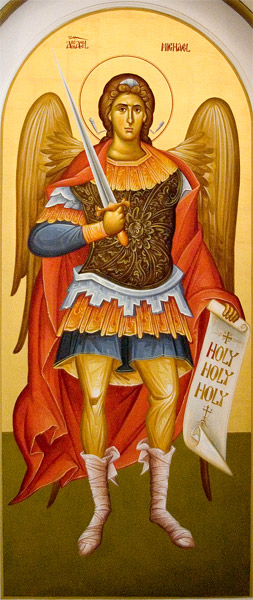
Feast of Saint Michael and All Angels


In the Preface to The Screwtape Letters, C. S. Lewis writes:

There are two equal and opposite errors into which our race can fall about the devils. One is to disbelieve in their existence. The other is to believe, and to feel an excessive and unhealthy interest in them.

Might the same be said for angels?

To disbelieve in the existence of angels is to deny the clear teaching of Scripture and the witness of the Church and her saints. To believe in angels and to feel an excessive interest in them to is shift the central focus from Christ, to choose the lesser part of our faith. A middle way between the extremes of the spectrum is needed: a way that acknowledges and honors the angels as servants of God – and often as God’s ministers on our behalf – but which leaves the mystery of these servants in the hands of God and worships God alone.

Several prayers in The Book of Common Prayer find and walk this via media.

Collect of Saint Michael and All Angels
Everlasting God, you have ordained and constituted in a wonderful order the ministries of angels and mortals: Mercifully grant that, as your holy angels always serve and worship you in heaven, so by your appointment they may help and defend us here on earth; through Jesus Christ our Lord, who lives and reigns with you and the Holy Spirit, one God, for ever and ever. Amen.

Collect at Compline
Visit this place, O Lord, and drive far from it all snares of the enemy; let your holy angels dwell with us to preserve us in peace; and let your blessing be upon us always; through Jesus Christ our Lord. Amen.

During the Great Thanksgiving (Eucharistic Prayer D)
Countless throngs of angels stand before you to serve you night and day; and, beholding the glory of your presence, they offer you unceasing praise. Joining with them, and giving voice to every creature under heaven, we acclaim you, and glorify your Name as we sing,

Holy, holy, holy Lord, God of power and might,
heaven and earth are full of your glory.
Hosanna in the highest.
Blessed is he who comes in the name of the Lord.
Hosanna in the highest.

In these prayers the church attends to God in praise and petition. In these prayers the church declares its solidarity and communion with the angels and with every praising creature under heaven in worship of the Holy, Holy, Holy Lord God of power and might. In these prayers the church places its hope in the Lord who commends us to the protection and ministry of his servants, the angels.

Worship God. Honor the angels, God’s servants and our fellow-servants. Stand with them and with all creation in praise. Acknowledge the incomprehensible mystery of God and his angelic providence for us and on our behalf. Amen.

Wednesday, September 22, 2010

Mere Christianity?


In the Preface to Mere Christianity, C. S. Lewis writes:

I hope no reader will suppose that “mere” Christianity is here put forward as an alternative to the creeds of the existing communions – as if a man could adopt it in preference to Congregationalism or Greek Orthodoxy or anything else. It is more like a hall out of which doors open into several rooms. If I can bring anyone into that hall I shall have done what I attempted. But it is in the rooms, not in the hall, that there are fires and chairs and meals. The hall is a place to wait in, a place from which to try the various doors, not a place to live in. For that purpose the worst of the rooms (whichever that may be) is, I think, preferable…and, of course, even in the hall, you must begin trying to obey the rules which are common to the whole house.

I have been thinking lately of mere Christianity – not just the classic by C. S. Lewis, but the notion behind the work, the notion that there is an essential Christianity that may be abstracted from the various culture-laden and denominational-bound expressions of the faith, a “hall” of faith as distinct from the rooms. Call it minimal Christianity, pure Christianity, mere Christianity or whatever you will. That is what Lewis sought to express; that was his project.

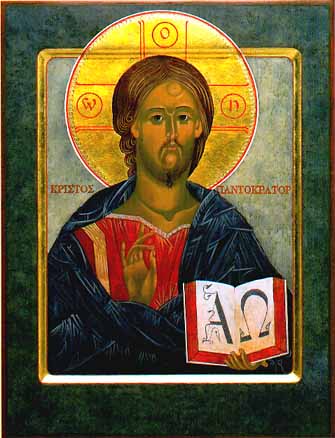
I suspect—the greatness of his work notwithstanding – that such a project is bound to fail. It requires a neutral place in which an objective observer may stand outside the faith to judge what is essential in the faith. If Postmodernism has taught us anything useful at all it is this: there are no neutral places and there are no objective observers. We are all storied people; we all stand within a story and we are all formed by that story. I can only say, “To me this element of the faith is essential and that one is not,” but you have every right to contradict my opinion. If an Orthodox writer had attempted Mere Christianity, for example, there surely would have been a chapter on icons; they are an essential element of the Orthodox faith. And yet many other faithful view them as optional sacred art – at best – and as “graven images” – at worst. One man’s mere Christianity is another’s cultural accretion.

It probably does little good to appeal to St. Vincent of Lérins dictum here either: That which has been believed always, everywhere, and by all. This does not codify mere Christianity – what must be in the essential faith. It merely says what we cannot include in the faith. We cannot claim as the faith of the one, holy, catholic, and apostolic church that which lacks antiquity, ubiquity, and unanimity. Even those tenets of faith and rituals of worship that are ancient and universally accepted also originated in a cultural setting. Simply because they persisted across cultures does not mean that they are therefore essential.

So, I think it may not be possible to define mere Christianity except, perhaps, to explain to non-Christians – or even “new” Christians – some of the things that most Christians tend to believe and practice. This seems a worthwhile task of communication – many writers, ancient and modern, have attempted it – provided the limits of the task are clearly stated, much as Lewis does in his preface. Mere Christianity may provide a textbook synopsis of the faith, but not a description of a faith that may be lived.

The task that I do not find worthwhile – and even find antithetical to the faith – is that of creating and practicing a mere Christianity designed to appeal to the prevailing culture through accommodation to that prevailing culture, when, in short, the church turns over to the culture the task of determining what is truly essential in the faith. The result is a minimalist faith that seeks to eliminate everything intrusive or offensive from the gospel. And the result is predictable – and observable in many churches. A primitive worldview that embraces spiritual forces, miracles, virgin birth, etc., is not truly essential; a rationalist and deistic approach will suffice. A social morality that addresses how and with whom we have sex, how we earn and spend money, how we relate to rich and poor and to allies and enemies is not truly essential; an ethic of tolerance will suffice. A kingdom loyalty that prophetically speaks truth to power, that proclaims Jesus – and not any earthly Caesar – as Lord is not truly essential; patriotism and a voter’s registration card will suffice. And when the culture has stripped all nonessentials from the faith, when culture has defined mere Christianity, the church has been reduced to just another civic club that is useful for service projects and for sanctioning the public exercise of cultural religion.

Instead of mere Christianity, we need the fullness of the faith – everything the faith has to offer: the Church, the Scriptures, the creeds, the councils, the patristic texts, the ancient hymns and prayers and liturgies, the sacraments, the ascetic teaching and practice. In mere Christianity less is not more; less is merely less.

Tuesday, September 14, 2010

Elevation of the Holy Cross

As God makes clear through his prophet Isaiah, not all religious rituals are equal: not all are holy, not all have the power to make holy. Condemning Israel’s vain fasting, God asks:

6 Is not this the fast that I choose: to loose the bonds of injustice, to undo the thongs of the yoke,to let the oppressed go free, and to break every yoke? 7 Is it not to share your bread with the hungry, and bring the homeless poor into your house; when you see the naked, to cover them, and not to hide yourself from your own kin? 8 Then your light shall break forth like the dawn, and your healing shall spring up quickly;your vindicator shall go before you, the glory of the Lord shall be your rearguard. 9 Then you shall call, and the Lord will answer; you shall cry for help, and he will say, Here I am (Is 58:6-9).

As the church elevates and exalts the cross of Christ this day, we do well to listen for prophetic words once again.

Is this not the elevation of the cross that I choose:
to take up your own cross – to lay down your own life – and follow me?
Is this not the exaltation of the cross that I choose:
to have within yourself the mind of Christ,
who, being in the form of God,
did not consider it robbery to be equal with God,
but made Himself of no reputation,
taking the form of a bondservant,
and coming in the likeness of men?
And being found in appearance as a man,
He humbled Himself and became obedient to the point of death,
even the death of the cross.
Is this not the elevation of the cross that I choose:
to be crucified to the world and for the world to be crucified to you?
Is this not the exaltation of the cross I choose:
to boast in nothing except the cross of the Lord Jesus Christ,
to know nothing but Christ and him crucified,
to embrace the foolishness of the gospel of the cross
– a foolishness wiser than men --
and the weakness of God – a weakness stronger than men?

The Elevation of the Holy Cross is far more than the commemoration of an historical event and more that a great feast of the church. It is a commitment to a cruciform life and a cruciform death, in the certainty of a glorious resurrection.

Almighty God, whose Son our Savior Jesus Christ was lifted
high upon the cross that he might draw the whole world to
himself: Mercifully grant that we, who glory in the mystery
of our redemption, may have grace to take up our cross and
follow him; who lives and reigns with you and the Holy
Spirit, one God, in glory everlasting. Amen.

Thursday, September 9, 2010

Corners


DISCLAIMER: A link to this post has been placed on the blogsite Official Street Preachers.com without notifying me or asking my permission. I find much on that blog offensive and opposed to the gospel message as I understand it. The street preachers I reflect upon in the following post bore no resemblance to many in evidence on the Street Preachers blog -- nor do I.

Following is a reflection on the preaching life written in May 2008.


Corners mark intersections and sometimes turning points. In the southern Appalachian Bible Belt of my youth they also marked the preferred pulpits of street preachers. With dripping white shirts, loosened black ties, and bibles swinging wildly to punctuate each point and sweep away all objections, this pair – prophetic like Moses and Elijah, thunderous like James and John – filled the sticky summer air at the corner of Market and Union with the sulphurous stench of hell. It was a cosmic battle of aromas each noon: brimstone on one corner, Nan Denton’s corn dogs on the next. The fate of immortal souls hung between in the balance. I usually brought my lunch to work and wasn’t often tempted to stray from manna to corn dogs. After all, at Nan Denton, Bobby just wanted to know my order. But these two on the other corner, they wanted to know where I would spend eternity – you know, if I just happened to die that night. Considering my apparently imminent demise, foregoing a corn dog seemed wisdom.

I watched them as they strode the small corner that was their earth, prophets of old somehow called forth like Samuel from his sleep. They bellowed and whispered and accused and plead. In a spiritual tag-team whose rules eluded me, when one tired and grew hoarse, the other, as if on cue, rose to continue the apocalyptic word uninterrupted. Rarely did the message vary: man’s sin, God’s love, the certainty of fearful judgment, and the urgent need for decision. People’s reactions varied. Some hurried by, late for a meeting or simply afraid of being drawn into the drama. Others grabbed a nearby park bench or concrete planter ledge, happy for the fifteen-minute diversion from the tedium of the day. Some listened and even mumbled an occasional, embarrassed, Amen. Rarely was anyone overtly rude and certainly never hostile. There was, in the South of that day, a genuine reverence for the message of God and a respect for the messengers of God, even if those messengers were – what? Characters? Yes, that’s what many would have said about them. They’re real characters, bless their hearts.

Not that they seemed to care what anyone thought. They were in the grip of the Spirit, witnesses in Jerusalem, and in all Judea and Samaria, and to the ends of the earth – the world compressed to a point, to a single street corner of a single block in a single southern city on this single summer day. As far as I could tell they were faithful witnesses in their way. That’s not a little thing.

The downtown of my youth is no more. The open-air farmers’ market surrounded by hole-in-the-wall, mom-and-pop shops has been replaced by the trendy vacuum of new age boutiques and vegan restaurants. Nan Denton is gone. And the preachers. I wonder about them from time to time. It’s been twenty-five years; if still alive the pair have grown old now. What do they do, street preachers in forced retirement? Shopping malls are the corners of our time, or maybe Starbuck’s. But it is hard to imagine street preachers there: mall preachers? coffeehouse preachers? I miss them. I miss the intersections and turning points they marked. I lament the landscape with too few signposts. I grieve the maps with no compass rose and no streets marked because “all roads lead to the same destination anyway and, after all, it’s the journey that matters.”

I preach. Each week I struggle and cooperate, battle and submit to God over the texts chosen for me, and each Sunday I preach my gleanings from the field of the Spirit. And though my little flock knows it not – and could scarcely imagine it – in the holy of holies of my heart, I am a street preacher, standing on the corner, marking intersections, longing to mark turning points. That corner of Market and Union lives now only in my memory, as likely do the Paul and Silas who preached there. I hope they live no less in my sermons, for I too stand at the corner of market and union – of Mammon and God. We all gather there seeking signposts: Which way? Manna or corn dogs? These intersections of our lives are no less real – and I think even more so – than the crisscrossing streets of downtown geography: the corners where our faith and our culture intersect and where decisions must be made. Straight or turn? And there I take my stand, pointing with words, gesturing toward a road less traveled. From a distance it appears a mere alleyway. I am convinced that, in the walking, it becomes a royal highway.

I preach. And when I do I stand at the intersection of heaven and earth, pointing, pointing. Perhaps I am as anachronous in my way as the street preachers – one born out of due season – and as foolish as they appeared to many gathered on that corner. I guess I hope so. Because the gospel is foolishness, as is its preaching. And I hope it is that foolish gospel that I preach. But what appears as foolishness to those who are perishing is to those being saved the very power and wisdom of God. That is the corner on which I stand, the intersection which I mark, the turning point for which I pray.

Grab a park bench or planter ledge if you will. Bring your lunch. Sit for fifteen minutes at the corner, at the intersection of Foolishness and Wisdom. I’ll preach there if the two faithful witnesses will tag me in. And, when it’s over, when the last Amen has been mumbled, feel free to enjoy a corn dog. Or manna.