Showing posts with label Eucharist. Show all posts

Saturday, April 2, 2011

Sermon: 4 Lent 2011 -- Signs and Miracles


Sermon: 4 Lent 2011

(John 6:1-14)

Signs and Miracles: Abundance and Incarnation


In the name of the Father, and of the Son, and of the Holy Spirit. Amen.


We now have come to the middle of our Lenten journey, a journey of prayer and fasting and almsgiving. Lent provides time and space for us to reflect on Jesus and on ourselves, on who we are and who, by God’s grace, we have yet to become. The Lenten pilgrimage is also a season of confession and repentance. And so, I will begin today with a confession of my own. I confess before God and you, my brothers and sisters, that I do not believe in miracles any longer. I once did, but I have repented of it. I mean, of course, that I do not believe in miracles as they are typically understood. In our prevailing Western culture, a miracle is a disruption of nature. A miracle is God stepping into the physical world from which he is normally absent and rarely welcome to violate the laws of nature that govern that physical world. Miracles are the creation of a people who have forgotten that God is everywhere present, filling all things. Miracles are the creation of a people who have forgotten that it is in God that we live and move and have our being. Miracles are the creation of a people who have forgotten that the sun rose this morning not because of Kepler or Newton or even because of natural law built into a clockwork universe, but because our God in his providential care spoke into the darkness once again and said, “Let there be light.” Miracles are not Christian; they are the stuff of mythology or paganism or deism, but not of Christianity. For in Christianity God is Emmanuel – God With Us – feeding the sparrows, clothing the flowers, making his sun rise on the evil and the good, and sending rain on the righteous and the unrighteous – intimately involved with every aspect of his creation. God is not absent from us. He does not need to step into the world, for his is already and always here. Christ is in our midst: he is and ever shall be.


Our faith really owns only one miracle, for truly only one miracle has occurred from the foundations of the world: the incarnation of the Word.


1 In the beginning was the Word, and the Word was with God, and the Word was God. 2 He was in the beginning with God. 3 All things were made through Him, and without Him nothing was made that was made. 4 In Him was life, and the life was the light of men. 5 And the light shines in the darkness, and the darkness did not comprehend it. 14 And the Word became flesh and dwelt among us, and we beheld His glory, the glory as of the only begotten of the Father, full of grace and truth (John 1:1-5, 14, NKJV).


The incarnation – the Word becoming flesh and dwelling among us – is the only true miracle, for in the incarnation God did step into his creation from outside it. God the creator became part of his creation in a way that he was not before, and that disrupted the laws of fallen nature: the incarnate God was born of a virgin; the incarnate God was tempted in all things as we are yet without sin; the incarnate God was crucified, died, and was buried; the incarnate God rose triumphant on the third day trampling down death by death and on those in the tombs bestowing life. The incarnation is the one and only, truly Christian miracle, and everything flows from it as surely as the blood flowed from the pierced hands and feet of our God-become-flesh, as surely as the river of the water of life flows from the throne of God and of the Lamb (cf Rev 22:1).


St. John the Evangelist did not believe in miracles either, even though he saw wonder upon wonder in company with Jesus. He never uses the word “miracle” in his gospel, though some English translations impose it on him. Instead, John writes of the “signs” (semeion) that accompany Jesus’ presence. Following the changing of the water into wine at the wedding at Cana, John writes:


Jesus did this, the first of his signs, in Cana of Galilee and revealed his glory; and his disciples believed in him (John 2:11, NRSV).


Signs are not disruptions of nature, but are revelations of God’s presence in his creation, revelations of the glory of God in the face of Christ, given that we might believe. Signs are the inevitable result of the miracle of the incarnation, sparks scattered glowing and sizzling from the burning bush of God’s presence. If Christ is in our midst – if God is indeed among us in human form – then signs of his presence must follow.


Once John the Baptist sent two of his disciples to Jesus.


20 When the men had come to Him, they said, “John the Baptist has sent us to You, saying, ‘Are You the Coming One, or do we look for another?’” 21 And that very hour He cured many of infirmities, afflictions, and evil spirits; and to many blind He gave sight. 22 Jesus answered and said to them, “Go and tell John the things you have seen and heard: that the blind see, the lame walk, the lepers are cleansed, the deaf hear, the dead are raised, the poor have the gospel preached to them (Lk 7:20-23, NKJV).


Well, of course: these are the signs that simply must follow the miracle of incarnation. When God is with us, creation is restored and men are saved and such signs point to Jesus. The signs that follow Jesus are not self-referential. They don’t point to themselves, but to something else; that is precisely what makes them signs. Signs point the way. Signs attract attention only to direct that attention to something else or to Someone else. The purpose of each healing was not merely to restore health, but to direct attention to the Healer. The purpose of each act of cleansing was not merely to restore ritual purity, but to direct attention to the Lamb of God who takes away the sin of the world. The purpose of each sign was to direct attention to the miracle of the incarnation, to the miracle of God-With-Us, and to our incarnate God’s redemptive purpose among us.


One of the clearest signs of God-With-Us is abundance. When Israel left Egypt at the first Passover, they left as newly freed slaves with a slave mentality still firmly intact, a mentality of lack: lack of power, lack of freedom, lack of security, lack of rest. The grumbling into which they often lapsed during this period is a reflection of the lack they had known and of their uncertainty about Moses’ and his God’s ability to provide.


When the forces of pharaoh pursued Israel to the Red Sea, Israel cried out to Moses:


“Because there were no graves in Egypt, have you taken us away to die in the wilderness? Why have you so dealt with us, to bring us up out of Egypt? 12 Is this not the word that we told you in Egypt, saying, ‘Let us alone that we may serve the Egyptians’? For it would have been better for us to serve the Egyptians than that we should die in the wilderness” (Ex 14:12b-14, NKJV).


We lack power. We lack security. But Moses replied, “The LORD will fight for you, and you shall hold your peace” (Ex 14:14, NKJV). The LORD is God-With-Us, and the sign of his presence is abundance of power and security.


On the fifteenth day of the second month of their freedom, Israel complained again against Moses and Aaron in the Wilderness of Sin:


“Oh, that we had died by the hand of the LORD in the land of Egypt, when we sat by the pots of meat and when we ate bread to the full! For you have brought us out into this wilderness to kill this whole assembly with hunger” (Ex 16:3b, NKJV).


We lack food – meat and bread. And the LORD rained bread from heaven – manna – and meat from the sky – quail – and everyone had enough. The LORD is God-With-Us, and the sign of his presence is abundance of food.


Finally, after forty years of unlearning the slave mentality of lack, Israel came to the land of promise, a land flowing with milk and honey, a land rich in grapes and olives and figs, a land of pasture for sheep. The LORD is God-With-Us, and the sign of his presence is abundance. When the LORD is God-With-Us, no one goes hungry; there is enough and to spare.


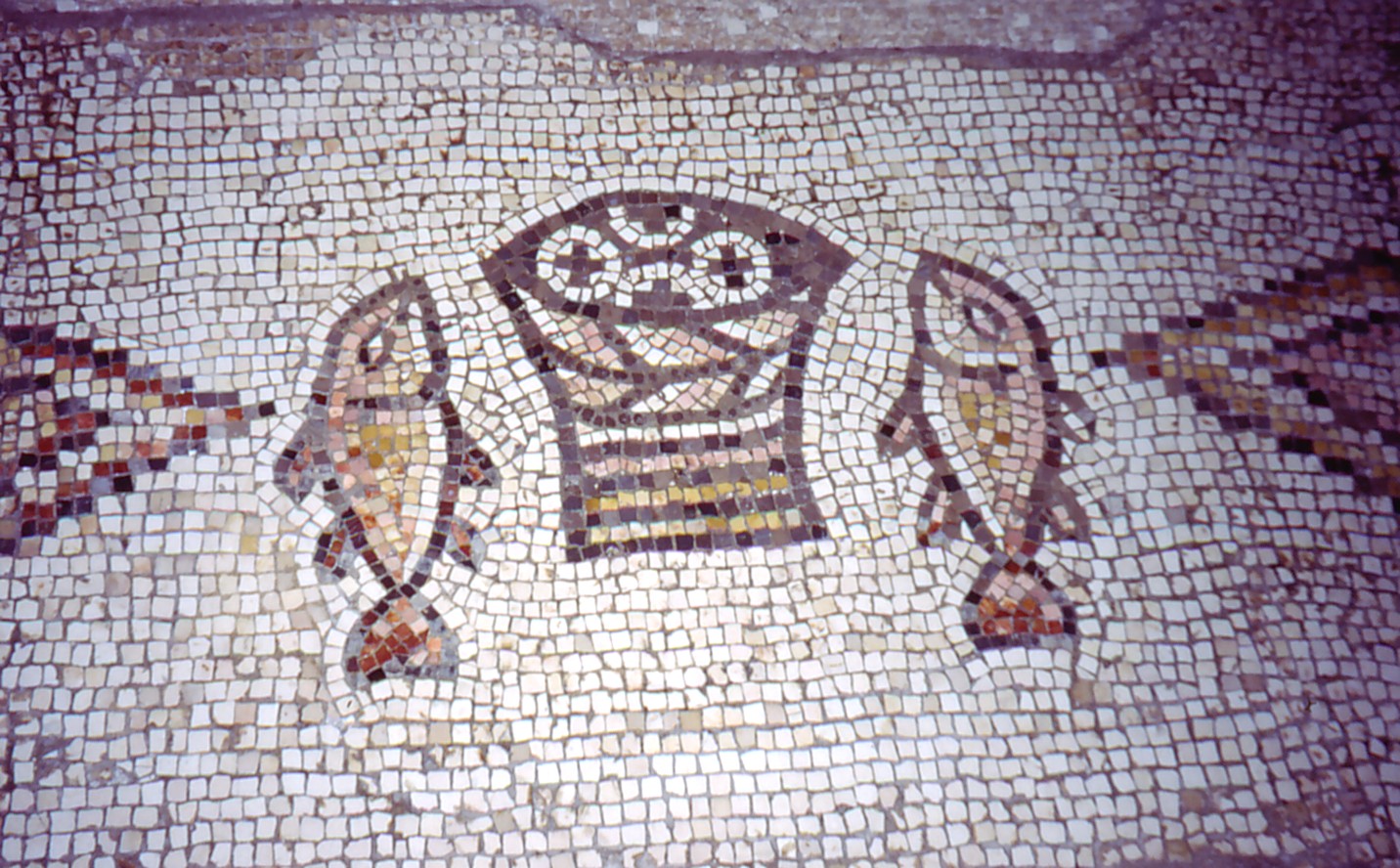
In this day’s Gospel another Passover is near and Israel gathers on a mountainside around the prophet – not Moses this time, but Jesus of Nazareth. They are hungry; they lack meat and bread. When Jesus proposes that his disciples feed them, Philip reminds him that they also lack money. Andrew snags a little boy’s lunch – five barley loaves and two fish – but what is that among so many? We lack food, Jesus – meat and bread – and we lack money with which to buy.


And so the stage is set for the great proclamation: God is with us, and the sign of his presence is abundance. When God is with us, no one goes hungry; there is enough and to spare.


“Make the people sit down,” is all Jesus says. Then he takes the loaves, gives thanks, and distributes them to the people, and then likewise with the fish: Jesus conducting a Eucharist of bread and meat.


John, who chronicles this event, wants us all to understand: this sign of abundance, like every other sign he documents, points to the one and only great miracle, the miracle of the incarnation – God is with us, in flesh and blood, in the person of this Galilean carpenter turned rabbi. One stands among us on this near Passover who is greater than Moses on that great, first Passover, for the one who stands among us is I Am. The one who stands among us giving us bread and fish is the same God who provided manna and quail to Israel. The one who stands among us brings such abundance that 12 basketsful of bread and fish remain – one for each tribe of Israel, one for each disciple of new Israel. Our God – this sign proclaims – is Emmanuel, the God of abundance, the God of leftovers.


Still, John presses the point; he will not let us miss the incarnation to which this sign of abundant bread points. He records a conversation between Jesus and the Jews just days later at the synagogue of Capernaum. Jesus says:


48 I am the bread of life. 49 Your fathers ate the manna in the wilderness, and are dead. 50 This is the bread which comes down from heaven, that one may eat of it and not die. 51 I am the living bread which came down from heaven. If anyone eats of this bread, he will live forever; and the bread that I shall give is My flesh, which I shall give for the life of the world.” 52 The Jews therefore quarreled among themselves, saying, “How can this Man give us His flesh to eat?” 53 Then Jesus said to them, “Most assuredly, I say to you, unless you eat the flesh of the Son of Man and drink His blood, you have no life in you. 54 Whoever eats My flesh and drinks My blood has eternal life, and I will raise him up at the last day. 55 For My flesh is food indeed, and My blood is drink indeed. 56 He who eats My flesh and drinks My blood abides in Me, and I in him. 57 As the living Father sent Me, and I live because of the Father, so he who feeds on Me will live because of Me. 58 This is the bread which came down from heaven—not as your fathers ate the manna, and are dead. He who eats this bread will live forever” (John 6:48-58, NKJV).

Manna and quail, bread and fish: these fill the belly and sustain physical life for a time. But, the bread which comes down from heaven – the body and blood of God incarnate – that fills the soul and sustains eternal life, abundant life through the incarnation. The manna and the barley loaves were signs of the miracle of the incarnation – God-With-Us. The Eucharist with its bread and wine is the sacramental sign of the miracle of the incarnation, a sign which proclaims that God is still with us. In the Eucharist Christ becomes incarnate in bread and wine and in those who eat and drink, and abundant life follows.


If Christ is in our midst – if God is indeed with us and among us – then signs of his presence will and must follow. If Christ is indeed incarnate – not just as a rabbi teaching on the hills of Galilee, but in the bread and wine on which we feast and in the lives of those who eat and drink – then abundance must be manifest. If Christ is with even two or three who gather in his name – if Christ is with the Church – then the Church must exhibit such signs of abundance that the world can no longer ignore the miracle of the incarnation and the redemptive work of Christ in restoring the cosmos. And what are these signs of abundance?


Worship – an abundance of worship – is a sign the world cannot easily ignore: “Come, let us sing to the Lord. Let us shout for joy to the Rock of our salvation” (Ps 95:1, BCP). Not just any worship will do, of course: certainly not worship from the lips when the heart is far from God, and certainly not worship as ritual or entertainment. No. True worship – worship in Spirit and truth, worship that gives right glory to our God and Father through Jesus Christ in the Holy Spirit – is worship that is unshaken by earthquake, worship that is not drowned by tsunami, worship that is unbowed before tyrants, worship that gives voice to all creation in praise that rises from the heart and pours from the lips in the first and natural language of mankind, the language heard in Eden before the fall: “Glory be to Thee, our God. Glory be to Thee.” This kind of worship is a sign to the world that indeed God is with us.


Love – an abundance of love – is a sign the world cannot easily ignore: “By this all will know that you are My disciples, if you have love for one another,” Jesus said and says still (John 13:35, NKJV). Not just any love will do, of course, and certainly not the romance or lust or even the casual friendship that often pass for love. No. Love as a sign of the incarnation is love that feeds the hungry, clothes the naked, binds up the broken, welcomes the stranger, forgives the enemy, prays for the persecutor, and lays down its life – all at once or day by day – for the sake of those who hate. This kind of love is a sign to the world that indeed God is with us.


Grace – an abundance of grace – is a sign the world cannot easily ignore. Not just any grace will do, of course, and certainly not grace as mere gentility or courtesy. No. Grace as a sign of the incarnation is nothing less than the presence and activity of God. An experience of true grace wakens the world from its sleep and makes it cry out like Jacob at Bethel, “The Lord is in this place, and I did not know it” (Gen 28:16b, LXX, The Orthodox Study Bible). Grace enters the pain of the world and stretches out its arms on the hard wood of the cross to share in, and as much as possible, to bear the pain of the world, bringing God’s presence into its darkest places. This kind of grace is a sign to the world that indeed God is with us.


Hope – an abundance of hope – is a sign the world cannot easily ignore. Not just any hope will do, of course, and certainly not hope that is barely disguised naïveté or rosy optimism. No. Hope as a sign of the incarnation is nothing less than stubborn and rock-solid eschatology – living in this present age with the certainty that Christ has already conquered every enemy and is even now putting the world to rights, living in this present age with the certainty that the last days have already dawned and the glorious consummation of all things is guaranteed, living in this present age with the proclamation always in our hearts and often on our lips:


Jesus Christ is Lord, and

Christ has died. Christ is risen. Christ will come again.


This kind of hope is a sign to the world that indeed God is with us.


None of these are miracles; I do not believe in miracles. They are signs, and I do believe in signs of the one and only great miracle, the incarnation of our Lord Jesus Christ through which he conquered sin and death and reconciled man to God. And I do believe that, with Christ in our midst, signs of abundance will and must accompany the church – abundance of worship, abundance of love, abundance of hope, abundance of grace. These signs in the lives of broken but redeemed men and women and children will awaken the world to the glory, wonder, and power of the incarnation. Five barley loaves and two fish fed a hungry crowd. A little bread and wine can feed the world and restore the cosmos. It does not take miracles – just signs. Amen.

Wednesday, June 16, 2010

Reflection: The Eucharistic Life


The eucharistic life consists of taking what bread and wine we have -- the hours and minutes of each "ordinary" day, our labor and leisure, our friends and enemies, our successes and failures -- taking all these and all else that we are and have and placing them on the altar before God with a prayer of great thanksgiving:


We pray you, Gracious God, to send your Holy Spirit upon these your gifts that they, too, may be sacraments of the Body of Christ and his Blood of the new Covenant, uniting us to your Son in his sacrifice, that we may be acceptable through him, being sanctified by the Holy Spirit.


And, if this were not difficult enough, we must then accept that these gifts we bring -- the bodies we have presented as our reasonable worship -- now manifest the real presence of our crucified and risen Lord and that we go out into the world to do the work he has given us to do as living members of the body of Christ and heirs of his eternal kingdom. Alleluia.

Saturday, January 16, 2010

Sermon: 2 Epiphany 2010 -- Banquet and Body


Sermon: 2 Epiphany (17 Jan 2010)
(Isaiah 62:1-5/Psalm 36:5-10/1 Corinthians 12:1-11/John 2:1-11)
Banquet and Body

Blessed be God: Father, Son, and Holy Spirit.
And blessed be His kingdom, now and for ever. Amen.

The texts today are a stories of transformation and metaphors of the kingdom of God.

For people who live close to the land, who depend on it for their basic sustenance, food and water are pressing issues, just having enough of each on a daily basis or surviving long-term famine and drought when they come – and they will come. Jesus was of such stock – the am ha-aretz, the people of the earth – as undoubtedly were many of his ancestors throughout their generations. This ancient, persistent concern about daily bread underlies the Hebrew prophets’ imagery and Jesus’ own imagery of the coming messianic banquet. When Messiah comes, Israel will be vindicated before the nations and all will be put to rights – all creation restored. And, at the dawning of this messianic age, as a symbol of its unending blessing and bounty, Israel, and the righteous among the nations, will be invited to the great banquet of choicest fare and finest wine. Isaiah’s words are typical of this hope and imagery.

On this mountain the Lord of hosts will make for all peoples a feast of rich food, a feast of well-aged wines, of rich food filled with marrow, of well-aged wines strained clear. And he will destroy on this mountain the shroud that is cast over all peoples, the sheet that is spread over all nations; he will swallow up death forever. Then the Lord God will wipe away the tears from all faces, and the disgrace of his people he will take away from all the earth, for the Lord has spoken (Is 25:6-8, NRSV).

We find the same image in Jewish folklore, in the Yiddish song A-Sudenyu, for example.

What will happen when the Messiah comes?
When the Messiah comes, we will have a feast.

What will we eat at the feast?
The Wild Ox and the Leviathan,
We will eat the Wild Ox and the Leviathan at the feast!

What will we drink at the feast?
The wine preserved [from Creation],
We will drink the preserved wine,
We will eat the Wild Ox and the Leviathan at the feast!

So, in the second-temple Judaism of Jesus’ day, every earthly banquet was seen as a foretaste of the great messianic banquet to come and assumed a symbolic importance far beyond sustenance. Every banquet brought forward into the present the hope of the future kingdom banquet. Every attendee was taking his present place in the messianic kingdom to come. This is why Jesus so inflamed the Scribes and Pharisees when he dined with tax collectors and sinners; he was welcoming these social and religious outcasts into the kingdom of God by feasting with them at a foretaste of the messianic banquet.

If every banquet assumes this symbolic importance, how much more a wedding banquet, especially given the prophetic imagery of God as a husband and Israel as a sometimes faithful, sometimes unfaithful, bride (cf Is 62:1-5). The wedding banquet is the ultimate earthly metaphor for the messianic banquet in the kingdom of God, hence its centrality in several of Jesus’ parables.

It is fitting then that the first of St. John’s signs – displays of Jesus’ power and authority that point to his divinity – the first of St. John’s signs takes place at a wedding banquet in Cana of Galilee.

On the third day there was a wedding in Cana of Galilee, and the mother of Jesus was there. 2Jesus and his disciples had also been invited to the wedding. 3When the wine gave out, the mother of Jesus said to him, ‘They have no wine.’ 4And Jesus said to her, ‘Woman, what concern is that to you and to me? My hour has not yet come’ (John 2:1-4, NRSV).

The wine gave out: four simple words to describe a social disaster with profound spiritual implications. The groom, who was responsible for the wedding banquet, and his entire family would be dishonored in the community for failing to adequately provide. The marriage, itself, would start under the cloud of this shame. What should have been a time of greatest rejoicing threatened to become a tragedy. And this mirrors perfectly the Jewish – and indeed the human – condition. The wine gave out. On this day at Cana in Galilee, at this festive occasion, Israel is still in exile under Roman occupation. Messiah still is not here. This wedding banquet – and every banquet like it – which should be a reminder of the messianic hope reminds instead of the messianic absence: until this day at Cana in Galilee.

5His mother said to the servants, ‘Do whatever he tells you.’ 6Now standing there were six stone water-jars for the Jewish rites of purification, each holding twenty or thirty gallons. 7Jesus said to them, ‘Fill the jars with water.’ And they filled them up to the brim. 8He said to them, ‘Now draw some out, and take it to the chief steward.’ So they took it. 9When the steward tasted the water that had become wine, and did not know where it came from (though the servants who had drawn the water knew), the steward called the bridegroom 10and said to him, ‘Everyone serves the good wine first, and then the inferior wine after the guests have become drunk. But you have kept the good wine until now.’ 11Jesus did this, the first of his signs, in Cana of Galilee, and revealed his glory; and his disciples believed in him (John 2:5-11, NRSV).

On this day at Cana in Galilee, when Jesus transforms water into wine he proclaims that the true messianic banquet has begun, not on that great and terrible day of the Lord in the future, but right here in the middle of history. On this day at Cana in Galilee, when Jesus transforms water into wine he proclaims that he is the Messiah, and that wherever he is, there too is the messianic banquet: there will spiritual food abound and heavenly wine overflow. This transformation of water into wine is a sign of kingdom come, of the presence of the kingdom of God right here in the middle of history. And his disciples understood, at least some of this “11Jesus did this, the first of his signs, in Cana of Galilee, and revealed his glory; and his disciples believed in him” (John 2:11, NRSV).

This is the first of the transformations in our lessons today; there is a second, and it, too, stands as a sign of kingdom come, of the presence of the kingdom of God right here in the middle of history. In Jesus’ messianic banquet parables (e.g. Mt 22:1-14 and Lk 14:15-24) a diverse and ragtag group sits at table together; you can imagine Jew and gentile, rich and poor, slave and free, male and female. And yet, in and through Jesus the Messiah, in and through their invitation to the messianic banquet, these polar opposites are transformed into one holy people, the people of God. This inclusive transformation, this acceptance of one another because each has been accepted by Jesus, is also a sign of kingdom come. St. Paul describes the transformation to the Christians in Galatia.

For you are all sons of God through faith in Christ Jesus. For as many of you as were baptized into Christ have put on Christ. There is neither Jew nor Greek, there is neither slave nor free, there is neither male nor female; for you are all one in Christ Jesus (Gal 3:26-28, NKJV).

Unity is the key; through Christ and in Christ, divisions cease, enmity is ended, and all are made one. This transformation is a clear sign of kingdom come.

And what symbols does Paul chose for this transformation? Not water to wine, not a wedding banquet, but the formation of a new body made of individual members bound together by the Spirit and working together in harmony.

For just as the body is one and has many members, and all the members of the body, though many, are one body, so it is with Christ. 13For in the one Spirit we were all baptized into one body—Jews or Greeks, slaves or free—and we were all made to drink of one Spirit (1 Cor 12:12-13, NRSV).

And what are the implications of this new body-life we share? First this: we are bound together so inextricably by the Spirit that we cannot do without one another, and we have no right to try. Each part, each member – no matter how humble or unimportant that member may appear – is essential to the welfare and function of the body. God alone knows the true value of each member and God himself orders and structures the body as he wills and knows. St. Paul writes:

Indeed, the body does not consist of one member but of many. 15If the foot were to say, ‘Because I am not a hand, I do not belong to the body’, that would not make it any less a part of the body. 16And if the ear were to say, ‘Because I am not an eye, I do not belong to the body’, that would not make it any less a part of the body. 17If the whole body were an eye, where would the hearing be? If the whole body were hearing, where would the sense of smell be? 18But as it is, God arranged the members in the body, each one of them, as he chose. 19If all were a single member, where would the body be? 20As it is, there are many members, yet one body. 21The eye cannot say to the hand, ‘I have no need of you’, nor again the head to the feet, ‘I have no need of you.’ 22On the contrary, the members of the body that seem to be weaker are indispensable, 23and those members of the body that we think less honourable we clothe with greater honour, and our less respectable members are treated with greater respect; 24whereas our more respectable members do not need this. But God has so arranged the body, giving the greater honour to the inferior member, 25that there may be no dissension within the body, but the members may have the same care for one another. 26If one member suffers, all suffer together with it; if one member is honoured, all rejoice together with it (1 Cor 12, 124-26, NRSV).

There is beautiful and fearful symmetry in this passage. The humble member cannot say to the honorable, “Because I am not as great as you, I am not truly part of the body.” Nor can the honorable member of the body say to the humble, “Because I am greater than you, you are not truly part of the body.” God alone knows the true value of each member and God himself orders and structures the body as he wills and knows, such that we suffer or rejoice, prosper or decline together: one with all, all with one. I know a saint from my childhood and young adult years, not with us any longer: may her memory be eternal! Her’s was the widow’s mite; widowed early with three children to raise, she had little to give to the church monetarily. For a time she cleaned the building until she was physically no longer able. Her’s were humble circumstances and she was, apparently, a humble member of the body. Yet, I learned in the last few years I knew her, that she prayed for me – for all of us in that congregation – daily. How many times her prayers saved me I may never know. But this I do know: the prayers of this humble saint were – and are, I think – of inestimable value, worth far more than all the words I spoke, or money I gave, or work I did on behalf of the body in that place. God placed her in the body at just the right time, in just the right place to be a sign to me and to all of us of kingdom come.

There is a second implication of this new body-life we share: none of us has the spiritual resource – Paul calls them spiritual gifts – to grow and serve apart from the rest of the body. Instead, God quips individuals for the common good. A blended metaphor of banquet and body comes to mind here – the classic, Church potluck meal. Oh, how I remember those of my childhood and how much I would like to eat just one more with those saints who have gone before: chicken and dumplings, green beans, turnip greens, mashed potatoes, corn bread – I’m from the south, after all – deviled eggs, homemade stack cake and pies with real meringue. No one brought enough to feed all of us, but all of us together brought enough to feed everyone. At this banquet the body feasted because each individual member shared the gifts God had given, no matter how grand or humble they might appear. And sometimes, just that simple chocolate cookie that a dear sister brought was the perfect finishing touch to the feast.

So it is in the apparently more spiritual realm of the church, as well.

Now there are varieties of gifts, but the same Spirit; 5and there are varieties of services, but the same Lord; 6and there are varieties of activities, but it is the same God who activates all of them in everyone. 7To each is given the manifestation of the Spirit for the common good. 8To one is given through the Spirit the utterance of wisdom, and to another the utterance of knowledge according to the same Spirit, 9to another faith by the same Spirit, to another gifts of healing by the one Spirit, 10to another the working of miracles, to another prophecy, to another the discernment of spirits, to another various kinds of tongues, to another the interpretation of tongues. 11All these are activated by one and the same Spirit, who allots to each one individually just as the Spirit chooses (1 Cor 12:4-11, NRSV).

To our assembly, to our body, I may bring a bit of knowledge – which God has given me, of course – and you bring your wisdom. Another brother brings his faith – which I need when mine is sorely lacking – and a sister brings her healing touch and words and prayer. Words are spoken and then explained and interpreted. Miracles happen in such a fellowship as together we discern the presence, power, and direction of the Spirit. A church living this way is a spiritual potluck: all are invited and all feast on the choicest fare and drink the finest wine, because each shares as God has provided. Such a fellowship of believers – transformed into one body in Christ – is a clear sign of kingdom come, not somewhere in the distant future, but right here and right now in the middle of history. And when the church begins to live out this unity and abundance not just among ourselves but in our world, then that world will see clearly that the kingdom has come among us and that the messianic banquet has begun.

The texts today are stories of transformation and metaphors of the kingdom of God. Jesus transforms water into wine and proclaims that the true messianic banquet has begun. The Spirit transforms dichotomous individuals into a gifted and unified body and proclaims kingdom come.

There is one final transformation to mention – not a metaphor but a sign, not a symbol but the thing itself. It lies at the intersection of banquet and body; it is, of course, the Eucharist. Around the Table of the Lord the body of Christ – this diverse group of men and women throughout all places in all times baptized into one Spirit – gathers for the messianic wedding banquet and feasts on the body and blood of Christ. And in so doing, week by week, bite by bite, sip by sip this body is transformed into the likeness of Christ, from glory to glory. Amen.

Saturday, November 7, 2009

Blessed Is He Who Reads and Those Who Hear: 23 Pentecost (8 Nov 2009)


1 The Revelation of Jesus Christ, which God gave Him to show His servants—things which must shortly take place. And He sent and signified it by His angel to His servant John, 2 who bore witness to the word of God, and to the testimony of Jesus Christ, to all things that he saw. 3 Blessed is he who reads and those who hear the words of this prophecy, and keep those things which are written in it; for the time is near (Rev 1:1-3, NKJV).


On Sunday, 8 November 2009, the Service of the Word at Trinity Church will consist of a few, brief background remarks followed by a congregational reading of The Revelation of John. There is blessing promised in the reading and in the hearing.
The Great Thanksgiving in the Service of Holy Eucharist is drawn from the text of The Revelation.
The Great Thanksgiving

Grace and peace to you from him who is, and who was, and who is to come,
and from Jesus Christ, who is the faithful witness,
the firstborn from the dead, and the ruler of the kings of the earth.
To him who loves us and has freed us from our sins by his blood,
and has made us to be a kingdom and priests
to serve his God and Father –
to him be glory and power for ever and ever! Amen.

“I am the Alpha and the Omega,” says the Lord God,
“who is, and who was, and who is to come, the Almighty.”

The Lord be with you.
And also with you.
Lift up your hearts.
We lift them to the Lord.

Let us give thanks to the Lord our God.
It is right to give him thanks and praise.
It is good and right to join with the living creatures around your throne,
Lord God, who day and night never stop saying:
Holy, holy, holy is the Lord God Almighty,
who was, and is, and is to come.

It is good and right to bow before you along with the twenty-four elders
who lay their crowns before your throne and say:
You are worthy, our Lord and God,
to receive glory and honor and power,
for you created all things,
and by your will they were created and have their being.

We praise you Lord God and your only begotten Son, Jesus Christ:
the Lion of the tribe of Judah, the Root of David,
the Lamb of God who takes away the sin of the world.
You are worthy, Lord Christ, because you were slain,
and with your blood you purchased a people for God
from every language and people and nation.
You have made them to be a kingdom and priests to serve our God,
and they will reign on earth.

With many angels numbering thousands upon thousands,
and ten thousand times ten thousand, in a loud voice we sing:
Worthy is the Lamb, who was slain,
to receive power and wealth and wisdom and strength
and honor and glory and praise! Amen.

Now, with every creature in heaven and on earth
and under the earth and on the sea
we sing your praises, O God who sits enthroned,
and your praises, Jesus Christ the Lamb:

To him who sits on the throne and unto the Lamb
be blessing and honor and glory and power forever. Amen.

Praise our God, all you his servants,
you who fear him, both small and great!
Hallelujah! For our Lord God Almighty reigns.

Let us rejoice and be glad and give him the glory!
For the wedding of the Lamb has come,
and his bride has made herself ready.

Blessed are those who are invited to the wedding supper of the Lamb!
These are the true words of God.

(All gather at the Table.)

(The following words of institution are from St. Paul’s letter to the saints in Corinth.)

We give you thanks, O God, for what we have received from the Lord,
that true word which has been passed on to us:

The Lord Jesus, on the night he was betrayed,
took bread, and when he had given thanks, he broke it and said,
“This is my body, which is for you;
do this in remembrance of me.”

In the same way, after supper he took the cup, saying,
“This cup is the new covenant in my blood;
do this, whenever you drink it, in remembrance of me.”

For whenever we eat this bread and drink this cup, gracious Father,
we proclaim the Lord’s death until he comes.
Therefore, whoever eats the bread or drinks the cup
in an unworthy manner will be guilty of sinning
against the body and blood of the Lord.
Therefore, we examine ourselves
before we eat of the bread and drink of the cup
that we may recognize the body of our Lord.

(Silence for self-examination)

We pray you, gracious God, to send your Holy Spirit upon these gifts
that they may be the Sacrament of the Body of Christ
and his Blood of the New Covenant.
Unite us to your Son in his sacrifice,
that we may be acceptable through him,
being sanctified by the Holy Spirit.
In the fullness of time, put all things in subjection under your Christ,
and bring us to that heavenly country where, with all your saints,
we may enter the everlasting heritage of your sons and daughters;
through Jesus Christ our Lord, the firstborn of all creation,
the head of the Church, and the author of our salvation.

Through Christ, and with Christ, and in Christ,
in the unity of the Holy Spirit,
all glory and honor are yours, almighty God,
forever and ever. Amen.

And now, as our Savior Christ has taught us,
we are bold to say,

Our Father, who art in heaven,
hallowed be thy Name, thy kingdom come,
thy will be done, on earth as it is in heaven.
Give us this day our daily bread.
And forgive us our trespasses,
as we forgive those who trespass against us.
And lead us not into temptation,
but deliver us from evil.
For thine is the kingdom,
and the power, and the glory,
for ever and ever. Amen.

The Breaking of the Bread

Alleluia! Christ our Passover is sacrificed for us;
Therefore let us keep the feast. Alleluia!

These are the gifts of God for the people of God.
Let us take them in remembrance that Christ died for us,
in celebration that he rose for us,
in proclamation that he will come again for us.
Feed on him in your hearts by faith, with thanksgiving.


Post-Communion Thanksgiving

Now have come the salvation and the power
and the kingdom of our God,
and the authority of his Christ:
victory by the blood of the Lamb and the word of the testimony.
The kingdom of the world has become
the kingdom of our Lord and of his Christ,
and he will reign for ever and ever.

Let us pray.

Almighty and everliving God,
we thank you for feeding us with the spiritual food
of the most precious Body and Blood
of your Son our Savior Jesus Christ;
and for assuring us in these holy mysteries
that we are living members of the Body of your Son,
and heirs of your eternal kingdom.
And now, Father, send us out
to do the work you have given us to do,
to love and serve you
as faithful witnesses of Christ our Lord.
To him, to you, and to the Holy Spirit,
be honor and glory, now and for ever. Amen.

Tuesday, April 7, 2009

Homily: Maundy Thursday (9 March 2009)


Homily: Maundy Thursday (9 March 2009)
(Exodus 12:1-14a/Psalm 78:14-20, 23-25/1 Corinthians 11:22-32/John 13:1-15)
The Tables of Power

In the name of the Father, and of the Son, and of the Holy Spirit. Amen.

Like many Christians I struggle with the role of faith in the public sector: How may we build best for the Kingdom of God in a fallen world, using the rubble of a fallen culture? Some Christians – and I express no judgment here – actively engage the political process hoping to gain for themselves, or for their elected representative, a seat at the tables of power where policies are formulated and laws first proposed. It is a way, I suppose, to influence public behavior toward a religious ethic, though whether the ways of men can rightly be used to accomplish the ends of God is a question we need seriously to consider.

The tables of power in Washington are found in the Oval Office, in the chambers and conference rooms of Congress, around the bench at the Supreme Court. Sit at one of these and you are important. Sit at one of these and you influence the course of history. Sit at one of these and people curry your favor and treat you with respect.

The church is sometimes interested in these tables of power – sometimes inordinately so – but not so much this day. This day another table beckons, one in an upper room in Jerusalem. It, too, is a table of power; in fact, it – and its host – defines power for Christians and defines our relationships with the powers-that-be, with all those who sit at other tables of power.

It is Passover week and Jesus sits at this table with his friends for a final meal, a last supper before his passion. James and John are there, the Sons of Thunder. I imagine they’ve jostled by their fellow disciples and planted themselves firmly next to Jesus – one at his right hand and one at his left – in this foretaste of the Kingdom banquet. John as much as “fesses up” in his account of the night. Calling himself the disciple whom Jesus loved he writes, “one of his disciples – the one whom Jesus loves – was reclining next to him” (John 13:23, NRSV). Of course, Peter is there, blustering as always, full of himself – full of pride and confidence in his own power. Judas is there, also, for a time, before Satan fills him and drives him out into the darkness of betrayal. The rest of the Twelve are seated at the table, as well: Philip, Andrew, Thomas, and Matthew emerging as distinct personalities with the others remaining mostly nondescript. Tables of power draw an assortment of characters: self-promoters, sycophants, doubters, anonymous functionaries, and traitors. And yet, with one notable exception, they are all here because they love Jesus, and mostly because he loves them.

At some point during the meal Jesus, the center and source of power at this table, leaves behind his role of host. Only John records what happens next.

1Now before the Feast of the Passover, when Jesus knew that his hour had come to depart out of this world to the Father, having loved his own who were in the world, he loved them to the end. 2During supper, when the devil had already put it into the heart of Judas Iscariot, Simon’s son, to betray him, 3Jesus, knowing that the Father had given all things into his hands, and that he had come from God and was going back to God, 4rose from supper. He laid aside his outer garments, and taking a towel, tied it around his waist. 5Then he poured water into a basin and began to wash the disciples’ feet and to wipe them with the towel that was wrapped around him. 6He came to Simon Peter, who said to him, "Lord, do you wash my feet?" 7 Jesus answered him, "What I am doing you do not understand now, but afterward you will understand." 8 Peter said to him, "You shall never wash my feet." Jesus answered him, "If I do not wash you, you have no share with me." 9Simon Peter said to him, "Lord, not my feet only but also my hands and my head!" 10Jesus said to him, "The one who has bathed does not need to wash, except for his feet, but is completely clean. And you are clean, but not every one of you." 11 For he knew who was to betray him; that was why he said, "Not all of you are clean."

12When he had washed their feet and put on his outer garments and resumed his place, he said to them, "Do you understand what I have done to you? 13 You call me Teacher and Lord, and you are right, for so I am. 14If I then, your Lord and Teacher, have washed your feet, you also ought to wash one another’s feet. 15For I have given you an example, that you also should do just as I have done to you. 16Truly, truly, I say to you, a servant is not greater than his master, nor is a messenger greater than the one who sent him. 17If you know these things, blessed are you if you do them (John 13:1-17, ESV).

This thing that Jesus does, this thing is outrageous; this thing is scandalous. Only the lowest house slave washes feet. Never would a disciple be required to wash the feet of his master, yet here the Master willingly washes the feet of his disciples.

In this moment of high drama, Jesus forever shifts the locus of power from the table to the floor, from the head to the feet, from the master to the servant. There is no room at the tables of power for the disciple of Jesus, but there is an infinite expanse of floor on which to kneel and wash feet. There is no position of mastery for the disciple of Jesus, but there are endless calls to service. There is no quarter for pride in the heart of the disciple of Jesus, but there is room enough and to spare for humility.

“Do you understand what I have done to you?” Jesus asks, and if we are honest we have to reply, “Probably not.” But he has given us an example to follow; so, at least on this one day each year, we, too, put aside our striving for power, we shelve our pride, and we kneel and wash one another’s feet. It is a small thing, a humble gesture, but that is precisely the point: we are people of the small thing, a community of the humble gesture. “We can do no great things,” Mother Teresa reminds us, “only small things with great love.” We are not greater than our Master. It is enough to be like him in this and in everything.

The church is sometimes interested in the world’s tables of power – sometimes inordinately so – but not so much this day. This day another table beckons, one in an upper room in Jerusalem. It, too, is a table of power; in fact, it – and its host – defines power for Christians and defines our relationships with the powers-that-be, with all those who sit at other tables of power.

14 And when the hour came, he reclined at table, and the apostles with him. 15And he said to them, "I have earnestly desired to eat this Passover with you before I suffer. 16For I tell you I will not eat it until it is fulfilled in the kingdom of God." 17And he took a cup, and when he had given thanks he said, "Take this, and divide it among yourselves. 18 For I tell you that from now on I will not drink of the fruit of the vine until the kingdom of God comes." 19 And he took bread, and when he had given thanks, he broke it and gave it to them, saying, "This is my body, which is given for you. Do this in remembrance of me." 20And likewise the cup after they had eaten, saying, "This cup that is poured out for you is the new covenant in my blood” (Luke 22:14-20, ESV).

These words of Jesus, this sacrament, this new covenant forever redefine true power as true sacrifice. At this table of power – to which all the world is invited – the high priest becomes the sacrificial Lamb of God who takes away the sin of the world and the host becomes the meal – body broken as bread and blood poured out as wine. “Can you drink the cup I am about to drink?” Jesus once asked James and John and continues to ask each of his disciples who lifts the cup of salvation at this table of power. “Will you take up your cross and follow me?” is, of course, what he means. This meal forever shifts the locus of power from table to cross, from marbled halls to borrowed tomb. There is no room at the tables of power for the disciple of Jesus, but there are many loaves – many lives – to be broken, much wine – much blood – to be poured out, and many crosses to be taken up and carried.

“Do you understand what I have done to you?” Jesus asks, and if we are honest we have to reply, “Probably not.” But he has given us an example to follow – an example and a commandment: “A new commandment I give to you, that you love one another; as I have loved you, that you also love one another. By this all will know that you are My disciples, if you have love for one another” (John 13:34-35, NKJV). And this is sacrament and grace and wonder, that true power is manifest as sacrificial love.

There is no room at the tables of power for the disciple of Jesus, but at the table of love – at the table of love there is always room for one more.

Amen.

Saturday, March 21, 2009

Meditation: 4 Lent (22 March 2009)


There is a moment in the Divine Liturgy of St. John Chrysostom at which the priest exclaims, “The Doors. The Doors.” The catechumens, aspirants to the faith, are escorted from the service – at least they were in Chrysostom’s day – and behind them the doors, the doors, are closed and bolted. The catechumens were welcome to hear the Word – in Scripture, Psalm, and exhortation – but what follows is so deep, so profound, and so intimate that only the illumined – the baptized – are permitted to see and hear and know.

What takes place behind the doors once they are shut and bolted against prying eyes or just immature eyes? The Creed: the baptized recite the Symbol of the Faith – the Nicene Creed. Only those who are willing to stake their lives, in this world and the next, on their faith in One God, the Father, the Almighty; in one Lord, Jesus Christ, the only Son of God; and in the Holy Spirit, the Lord, the giver of life are allowed to know, hear, and speak the Creed. And following the Creed the faithful approach the greatest of mysteries, the heart and soul of our faith – the Eucharistic Feast, the table of the Lord. In Chrysostom’s Divine Liturgy God is described as ineffable – beyond words – and incomprehensible – beyond intellect; the same could and must be said about the Eucharist. Eucharistic theology, the attempt to explain and “demystify” the Feast, is a fool’s errand. When asked to explain a dance she had just premiered the great artist Isadora Duncan responded, “If I could explain it, I wouldn’t have to dance it.” Likewise, if we could explain the Eucharist, we wouldn’t have to break the bread and lift the cup. At best, eucharistic theology is the search for metaphors – metaphors that shine a bit of light on first this facet, then that one, of this great jewel of our faith and life. Of course, the Eucharist is itself the overarching metaphor that shines light on all of human existence and on the glorious redemption of man through the love of God the Father, the sacrifice of God the Son, and the indwelling of God the Holy Spirit.

These are the mysteries we will explore at Trinity Church this Sunday, 4 Lent 2009. I approach the task of speaking about these holy mysteries with fear and trembling (ref. Isaiah 6:1-7), knowing my own deep limitations. And yet, I was comforted by the words I read this week in a small book titled Theosis: The True Purpose of Human Life (Archimandrite George, Holy Monastery of Saint Gregorios Mount Athos, 2006). What the abbot says about theosis I say about the eucharist:

“It is very daring for someone to talk about Theosis without first having tasted it. But we have dared what is beyond our power because we have faith in the mercy of our great God and Saviour Jesus Christ.”

Amen.