Showing posts with label soteriology. Show all posts

Friday, October 23, 2009

Benedict XVI and the Anglican Communion


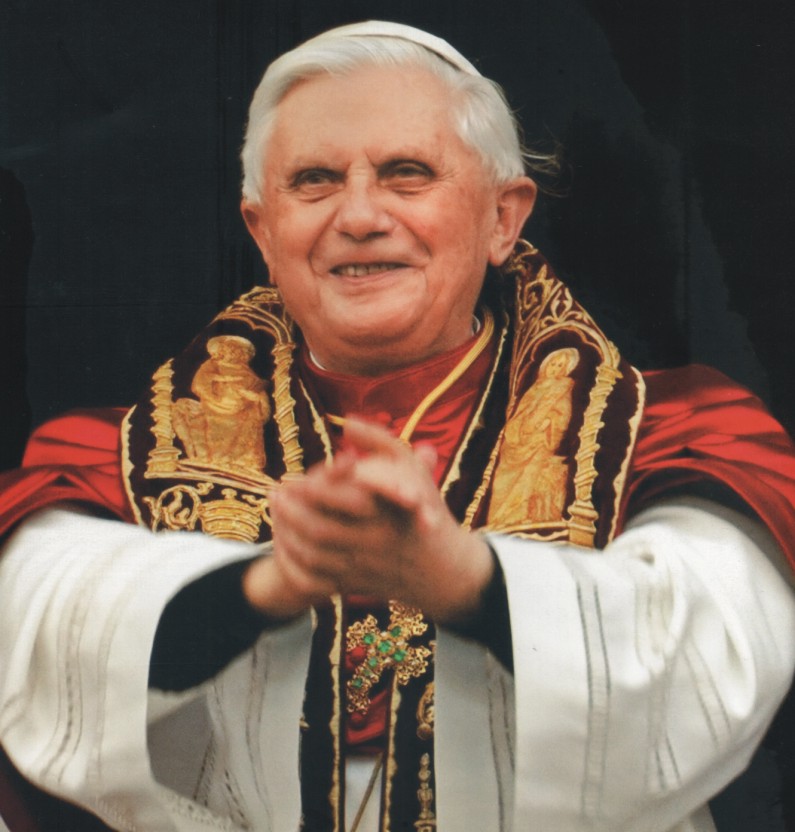
Pope Benedict XVI is making overtures to disaffected Anglican clergy, suggesting that even married Anglican priests may be accepted into the Roman Catholic priesthood and may retain their Anglican rites and liturgy. While details are vague, even this hint is enough to delight and dismay various contingents in both expressions of the faith.

Fr. Chris Larimer, vicar of St. Stephen’s Anglican Church in Louisville, Kentucky and author of Adiaphora blogsite recently posted the following quote in response to the Vatican’s announcement.

What can be supposed wanting in our Church in order to salvation? We have the Word of God, the Faith of the Apostles, the Creeds of the Primitive Church, the Articles of the four first General Councils, a holy liturgy, excellent prayers, perfect sacraments, faith and repentance, the Ten Commandments, and the sermons of Christ, and all the precepts and counsels of the Gospels. We … require and strictly exact the severity of a holy life. … We communicate often, our priests absolve the penitent. Our Bishops ordain priests, and confirm baptised persons, and bless their people and intercede for them. And what could here, be wanting to salvation?”
- Jeremy Taylor, Bp. of Down & Connor (1613-1667)

Why return to Rome, wondered Anglican Bp. Taylor nearly four centuries ago, when there is nothing wanting in Canterbury? Of course, much has changed in both Roman Catholicism and Anglicanism in the intervening centuries, but the question still hangs in the air – especially now.

“And what could here, be wanting to salvation?” It would be presumptuous – for several reasons – for me to posit an answer to Bp. Taylor’s question. First, I am neither Anglican nor Roman Catholic. Second, and most significant, to answer the question would require me to stand outside the church and to stand in judgment upon one or another expression of it. As James, the brother of our Lord, taught us (cf James 4:11-12), that is a most dangerous place to stand: Who am I to judge my neighbor – particular when he is the servant of another?

But – Already I’m on treacherous ground; Lord, have mercy on this sinner. – there is implied by Bp. Taylor’s question a notion that perhaps I may address without transgression. Surely, the implied assertion that Anglicanism lacks nothing for salvation cannot mean that Canterbury and Rome are equivalent/indistinguishable in their understanding and practice of Christian salvation? The differences between Anglicanism and Catholicism are profound. And, as different as they are one from another, taken together, they are more different still from Orthodoxy. “What could … be wanting to salvation?” begs this even more fundamental question: “Are all views of the nature of salvation equivalent?” And, if they are not equivalent, are the differences significant?

We can answer these reformulated questions without standing in judgment of any particular communion. No, all views of the nature of salvation are not equivalent. Yes, the differences are significant. Both Anglicanism and Roman Catholicism lack or de-emphasize the therapeutic understanding of salvation so central to Orthodoxy, just as Orthodoxy lacks or de-emphasizes the forensic understanding of salvation prevalent in Western expressions of the faith. These differences in emphasis lead to corresponding differences in theology and praxis. Orthodox theosis – and life of askesis generally required to approach it – for example, is relatively foreign to the Western church; yet, it is the goal and nature of salvation in the Eastern church. The Western concept of original sin is not equivalent to the Eastern understanding of ancestral sin. Simply put, Athanasius is not Anselm.

So, to return to Bp. Taylor’s question: “And what could here, be wanting to salvation?” In one sense, nothing; salvation is available on paths that lead through Canterbury, Rome, Constantinople, and Antioch. But that doesn’t mean the paths are the same.

Friday, July 24, 2009

Sermon: 8 Pentecost (26 July 2009)


Sermon: 8 Pentecost (26 July 2009)
(2 Samuel 11:1-15/Psalm 14/Ephesians 3:14-21/John 6:1-21)
Being-In and In-Being

Blessed be God: Father, Son, and Holy Spirit.
And blessed be His Kingdom, now and for ever. Amen.

John Wesley, the father of Methodism, once remarked that if he were not run out of town after preaching, he reckoned it was not the gospel he had preached. He believed – and his life bore ample witness – that the gospel of Jesus Christ is so scandalous, so offensive, that a straightforward proclamation of it will almost certainly provoke hostility and persecution.

Saint Paul writes the letter to the churches in western Asia Minor – the letter we call Ephesians – while imprisoned in Rome, ca. 61-63. For a quarter of a century since his dramatic conversion Paul has proclaimed the gospel and for a quarter of a century he has suffered hostility and persecution: pursuit from town to town, arrest, beatings with rods and whips, stoning, and now imprisonment – all for the sake of the scandalous, offensive good news of Jesus Christ. To the Jews who await a mighty savior, a liberator, Paul proclaims Jesus as Messiah – Jesus the suffering servant, crucified, dead, and buried. To the Sadducees who put all their hope in this world, this life, and dismiss hope for any other, Paul proclaims Jesus risen the third day, Jesus trampling down death by death and upon those in the tombs bestowing life. To the Romans who hail Caesar as their god and Rome as the empire of their god, Paul proclaims Jesus as the one true Lord of lords and King of kings, the true Lord who has begun his reign in the Kingdom of God – the true Lord before whom every knee must bow and whose name every tongue must confess. Scandal and offense, and yet Paul attributes his current imprisonment not to these offenses, but to another aspect of the gospel, to the mystery of the gospel unique to his calling and mission.

1 For this reason I, Paul, the prisoner of Christ Jesus for you Gentiles— 2 if indeed you have heard of the dispensation of the grace of God which was given to me for you, 3 how that by revelation He made known to me the mystery (as I have briefly written already, 4 by which, when you read, you may understand my knowledge in the mystery of Christ), 5 which in other ages was not made known to the sons of men, as it has now been revealed by the Spirit to His holy apostles and prophets: 6 that the Gentiles should be fellow heirs, of the same body, and partakers of His promise in Christ through the gospel (Eph 3:1-6, NKJV).

The great offense for which God appointed Paul herald, the great scandal for which Paul now finds himself imprisoned is this: the Gentiles have now become fellow-heirs with Israel, members of the same body, sharers in the promise in Christ Jesus through the gospel. This proclamation has provoked the indignation of Israel – of scribe, Pharisee, and Sadducee alike – and the violent response of Rome’s minor functionaries and has landed Paul in a Roman prison awaiting trial before Caesar himself. And so Paul reckons – in light of “being run out of town,” in light of all his suffering – that it must be the gospel – the offensive, scandalous gospel – that he has preached, and in that he glories. “I pray therefore that you may not lose heart over my sufferings for you,” Paul writes from his confinement; “they are your glory” (Eph 3:13). Paul’s sufferings bear witness to his faithfulness to God’s calling and to the truth of his proclamation.

For this reason – for the good news that the Gentiles are fellow-heirs with Israel through faith in Jesus Christ – for this reason I am in prison, Paul writes. And for this reason, “I bow my knees to the Father of our Lord Jesus Christ from whom the whole family in heaven and on earth is named,” (Eph 3:14-15, NKJV) – the whole family, for there is only one family in Christ: one body and one Spirit, one hope and calling; one Lord, one faith, one baptism; one God and Father of all, who is above all, and through all, and in you all (cf Eph 4:3-6). Yes, Paul is in prison for the sake of this good news. The Jews, before whom he would not bow, are convinced that he effectively has been silenced by his imprisonment. The Romans, before whom he would not bow, believe he effectively has been quarantined by his imprisonment. The God and Father of our Lord Jesus Christ, before whom Paul does bow, is not silenced, is not quarantined. This God to whom Paul bows his knees is able to do exceedingly abundantly above all that we ask or imagine according to the power that works in us (cf Eph 3:20), the power which raised Jesus from the dead and which will also raise us with him. Does this bowing of the knees, this prayer of a Roman prisoner really matter? Some three decades later another Roman prisoner, Saint John the Theologian, exiled on Patmos is caught up in the Spirit on the Lord’s Day as he bows the knees; he is caught up in the Spirit and granted a vision of heaven; he who prays is granted a vision of prayer.

1 When He [the Lamb of God] opened the seventh seal, there was silence in heaven for about half an hour. 2 And I saw the seven angels who stand before God, and to them were given seven trumpets. 3 Then another angel, having a golden censer, came and stood at the altar. He was given much incense, that he should offer it with the prayers of all the saints upon the golden altar which was before the throne. 4 And the smoke of the incense, with the prayers of the saints, ascended before God from the angel’s hand. 5 Then the angel took the censer, filled it with fire from the altar, and threw it to the earth. And there were noises, thunderings, lightnings, and an earthquake.6 So the seven angels who had the seven trumpets prepared themselves to sound (Rev 8:1-6, NKJV).

The prayers of the saints are never exiled, never imprisoned. They ascend before God who stills all of heaven to listen. They ascend before God in great clouds of sweet smelling incense. They ascend before God not feeble and alone, but powerfully united with the prayers of all the saints, all the Church. They ascend before God where they are answered and returned to earth with God’s earth-shaking power, with noise and thunder and lightning and earthquake. Beware scribe and Pharisee and Sadducee. Tremble Caesar and all the powers of Rome. A prisoner is praying. When Paul bows his knees he transcends all limitations of circumstance and space and time, and boldly approaches the God and Father of our Lord Jesus Christ through the way Christ himself has opened. When Paul prays he contends against principalities and powers, against the rulers of the darkness of this age, against spiritual hosts of wickedness in the heavenly places (cf Eph 6:12). So, too, when you pray, when the Church prays to Him who is able to do exceedingly abundantly above all that we can ask or imagine.

What is Paul’s prayer? He prays above all that the Gentiles’ new status of life will be reflected in and matched by a new reality of life; that they will not only be in the family of God through Jesus, but that the family of God through Jesus will be in them.

Once, many came to John the Baptizer to confess their sins and to be baptized in the Jordan – all Jews, all in the family of God.

7 But when he saw many of the Pharisees and Sadducees coming to his baptism, he said to them, “Brood of vipers! Who warned you to flee from the wrath to come? 8 Therefore bear fruits worthy of repentance, 9 and do not think to say to yourselves, ‘We have Abraham as our father.’ For I say to you that God is able to raise up children to Abraham from these stones. 10 And even now the ax is laid to the root of the trees. Therefore every tree which does not bear good fruit is cut down and thrown into the fire (Mt 3:7-10, NKJV).

Being in Abraham was not enough; Abraham was not in them. They did not bear the fruit of faith and righteousness that Abraham had borne. The reality of life did not match the status and thus baptism would avail them nothing.

A certain man had two sons.

12 And the younger of them said to his father, ‘Father, give me the portion of goods that falls to me.’ So he divided to them his livelihood. 13 And not many days after, the younger son gathered all together, journeyed to a far country, and there wasted his possessions with prodigal living. 14 But when he had spent all, there arose a severe famine in that land, and he began to be in want. 15 Then he went and joined himself to a citizen of that country, and he sent him into his fields to feed swine. 16 And he would gladly have filled his stomach with the pods that the swine ate, and no one gave him anything (Luke 15:12-16, NKJV).

This young man was still his father’s beloved son, still a member of the family. But, being in the family availed him nothing because the family was not in him. The reality of his life did not match the status of his life.

Parables abound. A king compelled the poor and the maimed, the lame and the blind to attend the wedding banquet of his son – gave them the status of honored guests, but cast out the one who refused to don the wedding garment. Ten virgins took lamps and went to meet the bridegroom; they were in the wedding party. Five had ample oil; five did not. Five lamps burned brightly; five guttered out. Five virgins escorted the bridegroom into the wedding; five did not.

Being chosen to be in God’s family, in God’s life, is an inestimable blessing; Paul cannot emphasize this enough to the Gentiles. Yet, unless the reality of in-being matches the status of being-in, one is an unrepentant son of Abraham, a prodigal son, an underdressed wedding guest, a wedding attendant left outside in the dark. As wondrous as it is to be in Christ, Christ must also be in us for reality to match status.

There are questions which haunt all those Christians who are even remotely awake and aware. Why does the church seemingly make so little difference in the world – so little difference that Europe is now increasingly described as post-Christian? Why are so many individual Christians seemingly indistinguishable from their pagan neighbors? Why am I no better than I am? Part of the answer – just part, but an important part – lies in these parables of Jesus and in the prayer of Paul: we have contented ourselves with status and have neglected reality; we have gloried in being in Christ without pressing onward until Christ is in us. This state is the sad result of an errant theology that equates salvation with status only and not with reality, with one-time event only and not with life-long process. It is marvelous to say, “We have confessed Christ; we have been baptized; we have received the status ‘in-Christ’.” But it is not enough unless we can also say, “We are confessing Christ; we are living the baptismal life; we are receiving the reality of ‘Christ-in-us’.” It is not enough to say “I have been saved;” we must also say, “I am being saved.”

And so Paul bows his knees to the Father of our Lord Jesus Christ and prays for these Gentile Christians that the reality of their lives might match their new status; that as they are in Christ, Christ might also be in them. He prays that the Spirit may dwell in the depths of their being – in the inner man. He prays that Christ may dwell in their hearts through faith. He prays that they may be filled with all the fullness of God.

14 For this reason I bow my knees to the Father of our Lord Jesus Christ, 15 from whom the whole family in heaven and earth is named, 16 that He would grant you, according to the riches of His glory, to be strengthened with might through His Spirit in the inner man, 17 that Christ may dwell in your hearts through faith; that you, being rooted and grounded in love, 18 may be able to comprehend with all the saints what is the width and length and depth and height— 19 to know the love of Christ which passes knowledge; that you may be filled with all the fullness of God (Eph 3:14-19, NKJV).

Paul prays beyond status to reality, beyond designation to transformation. The beginning of our salvation is to be declared “in-Christ” by the grace of God; the end (telos) – the goal of our salvation – is to be filled with all the fullness of God, to be transformed into the likeness of Christ Jesus, and truly to be partakers of the divine nature.

The Father in us names us as His own. The Spirit in us strengthens us for the struggle toward righteousness. Christ in us roots us and grounds us in love, a love which passes knowledge, a love which fills us with the fullness of God. In the power of our God – Father, Son, and Holy Spirit – we are to work diligently to make reality match status. Not Paul only, but Peter also teaches this.

5 But also for this very reason, giving all diligence, add to your faith virtue, to virtue knowledge, 6 to knowledge self-control, to self-control perseverance, to perseverance godliness, 7 to godliness brotherly kindness, and to brotherly kindness love. 8 For if these things are yours and abound, you will be neither barren nor unfruitful in the knowledge of our Lord Jesus Christ. 9 For he who lacks these things is shortsighted, even to blindness, and has forgotten that he was cleansed from his old sins. 10 Therefore, brethren, be even more diligent to make your call and election sure, for if you do these things you will never stumble; 11 for so an entrance will be supplied to you abundantly into the everlasting kingdom of our Lord and Savior Jesus Christ (2 Peter 1:5-11, NKJV).

Without these hard-won virtues and disciplines – gained through full immersion in the life of the Church – we are Christians in name and status, but we have not made the name and status established reality.

Following Paul’s prayer, his appeal to God on behalf of the Gentiles, Paul appeals to the Gentiles on behalf of God.

1 I, therefore, the prisoner of the Lord, beseech you to walk worthy of the calling with which you were called (Eph 4:1, NKJV).

Walk worthy of your calling. Live the reality of your status. This is Paul’s appeal to the Gentiles. This is God’s appeal, through Paul, to us.

Amen.