Sunday, November 28, 2010

Advent 1: Watch


We inhabit and are formed by story, inescapably so; our only real choice is which story or stories will form us. And many compete for that role. There is the patriotic story that forms us first as citizens ready to sacrifice all for the good of the nation/state. There is the commercial story that forms us first as producers and consumers willing to sacrifice all for economic security. There is the humanist story that forms us first as free and self-realized individuals willing to sacrifice all for personal happiness. And, there is the Christian story, that forms us first as the image-bearers of God, whose God was willing to sacrifice all for our salvation and for the reclamation of the cosmos. Which story will it be? We all must choose or others will be happy to choose for us.

Each story creates symbols and seasons, moments and rituals and objects in which the story is embedded and embodied. The Fourth of July is such a season and Old Glory is such a symbol in the patriotic story. Black Friday – and the whole season from just before Thanksgiving until just after New Year’s Day – serves the commercial story in a similar fashion. The Christian story has its Sacraments and its daily and weekly and yearly liturgies. Just now, the Christian story offers a symbol in time – the season of Advent. It is a way of making the story present to us again, of making us conscious of our place in it. And such consciousness is by no means easy to maintain. Advent shouts at us: Wake up – the night is far gone and the day is at hand. Your salvation is nearer now than when you first believed.

Advent relocates us in the midst of the story, far from Alpha, at an unknown remove from Omega and calls out – watch. St. Benedict began the prologue to his rule with the imperative listen; Advent begins with look. Look well in every direction possible: backward to the first advent – incarnation; forward to the last advent – parousia. But don’t forget to look around in the present, for we do not simply remember the once-present, now-absent Lord who will one day come again. We even now look around to see the Heavenly King, the Comforter, the Spirit of Truth Who is everywhere present and filling all things, the Treasury of good things and the Giver of life. We look for the Holy Spirit within and without to manifest God’s continuing presence with us. We look for the body of Christ, the church, to manifest God’s continuing presence with us. In the midst of the story, in the present moment, Advent proclaims, “Holy, holy, holy is the Lord God Almighty, Who was, and Who is, and Who is to come.”

Advent is the time to look, to keep watch, to be prepared. We keep on believing; we keep on loving; we keep on obeying. But,

We are not simply to believe, but to watch; not simply to love, but to watch; not simply to obey, but to watch…to be detached from what is present, and to live in what in unseen; to live in the thought of Christ as he came once, and as he will come again, to desire his second coming.[1]

The Anglican collect for this first Sunday of Advent says it well:

Almighty God, give us grace that we may cast away the works of darkness, and put upon us the armor of light, now in the time of this mortal life in which thy Son Jesus Christ came to visit us in great humility; that in the last day, when he shall come again in his glorious majesty to judge both the quick and the dead; we may rise to the life immortal; through him who liveth and reigneth with thee and the Holy Ghost, one God, now and for ever. Amen.

Watch.


[1] John Henry Newman, Parochial and Plain Sermons, quoted in Jon M. Sweeney, Cloister Talks.

Saturday, November 20, 2010

Thanksgiving and Personhood


Bart Ehrman is a New Testament scholar, a distinguished professor of religious studies at the University of North Carolina at Chapel Hill, a prolific author, and an agnostic – made so by his personal struggles with theodicy, the problem of suffering in a world created and ruled by a good God. I once heard a debate between Ehrman and Anglican Bishop N. T. Wright – himself a New Testament Scholar and recognized expert on the historical Jesus and Pauline studies– on this topic. Each scored a few debating points; neither offered much new in the perennial debate. The discussion was generally forgettable, with the exception of one moment of personal reflection by Ehrman. In recounting his loss of faith and its aftermath, Ehrman acknowledged a void left behind: the lack of anyone to give thanks to for the many moments of grace in his life. Without God, it is impossible to give thanks – though one may be genuinely thankful – for the many “accidental” blessings of life: the presence of a loving companion, the health of family, the abundance of goods, the joy of meaningful work. What do we do with these deep feelings of gratitude when no one is responsible for the blessings, when there is no one to thank? This is Ehrman’s – and any agnostic’s – dilemma, and Ehrman truthfully and courageously confesses it.

This haunting confession points to a deep truth of thanksgiving. It is not enough to feel vaguely, if genuinely, thankful. Thanks must be given; it must be expressed personally – from person to person. So one Eucharistic Prayer begins:

Celebrant: Let us give thanks to the Lord our God.
People: It is right to give him thanks and praise.
Celebrant: It is truly right to glorify you, Father, and to give you thanks; for you alone are God, living and true, dwelling in light inaccessible from before time and forever.

We come as person -- gathered in communion with other persons -- to Person. Christian thanksgiving -- and all true thanksgiving -- begins in personhood, in the recognition that the other has enriched you, that the other is a source of blessing. Christian thanksgiving begins with doxology, with the recognition and acknowledgement that God is the Other from Whom all blessings flow. Christian thanksgiving begins with prayer to God who is everywhere present and filling all things, the Treasury of good things and Giver of life.

Orthodox anthropology tells us that man is a tripartite being: body, soul, and spirit. The soul is both life force and mind, the reasoning, discursive aspect of man that grapples with such things as theodicy. The spirit is more central still. It perceives truth directly, unmediated by reason, truth revealed by Person to person. Thanksgiving lives in the spirit and transcends rational doubt. Ehrman knows -- and knows in the spirit -- that it is good and right, always and everywhere, to give thanks to the Father, the Almighty. More's the pity that he has no way now to do so.

By God's grace we do. And so, on this Feast of Thanksgiving -- and every day -- let us offer our tribute of thanks and praise to God: Creator, Redeemer, and Sanctifier.

Almighty God, Father of all mercies,
we your unworthy servants give you humble thanks
for all your goodness and loving kindness
to us and to all whom you have made.
We bless you for our creation, preservation,
and all the blessings of this life;
but above all for your immeasurable love
in the redemption of the world by our Lord Jesus Christ;
for the means of grace, and for the hope of glory.
And, we pray, give us such an awareness of your mercies,
that with truly thankful hearts we may show forth your praise,
not only with our lips, but in our lives,
by giving up our selves to your service,
and by walking before you
in holiness and righteousness all our days;
through Jesus Christ our Lord,
to whom, with you and the Holy Spirit,
be honor and glory throughout all ages. Amen.

Saturday, November 6, 2010

Feast of All Saints


All Saints’ Day: 7 November 2010
A Service of Memory at Lonsdale United Methodist Church
(Sirach 44:1-10, 13-15/1 Corinthians 11:23-26)
A Poor Sort of Memory

Grace to you, and peace, from God our Father and from the Lord Jesus Christ.

In the little corner of the Kingdom of God that I occupy, I would now greet my brothers and sisters in the Lord with these words: The Lord be with you.
And they would respond: And also with you.
And so, my dear brothers and sister in the Lord in this holy place, I greet you in the Lord’s name: The Lord be with you.

Let us pray.

Almighty God, you have knit together your elect in one communion and fellowship in the mystical body of your Son Christ our Lord: Give us grace so to follow your blessed saints in all virtuous and godly living, that we may come to those ineffable joys that you have prepared for those who truly love you; through Jesus Christ our Lord, who with you and the Holy Spirit lives and reigns, one God, in glory everlasting. Amen.

Hear the word of the Lord, given to Ben Sirach, some two centuries before the birth of Christ.

Let us now sing the praises of famous men,
our ancestors in their generations.
The Lord apportioned to them great glory,
his majesty from the beginning.
There were those who ruled in their kingdoms,
and made a name for themselves by their valor;
those who gave counsel because they were intelligent;
those who spoke in prophetic oracles;
those who led the people by their counsels
and by their knowledge of the people's lore;
they were wise in their words of instruction;
those who composed musical tunes,
or put verses in writing;
rich men endowed with resources,
living peacefully in their homes--
all these were honored in their generations,
and were the pride of their times.
Some of them have left behind a name,
so that others declare their praise.
But of others there is no memory;
they have perished as though they had never existed;
they have become as though they had never been born,
they and their children after them.
But these also were godly men,
whose righteous deeds have not been forgotten;
Their offspring will continue forever,
and their glory will never be blotted out.
Their bodies are buried in peace,
but their name lives on generation after generation.
The assembly declares
their wisdom,
and the congregation proclaims their praise (Ecclus 44:1-10, 13-15)[1].

On this feast of All Saints’, the scripture, and our hearts, tell us that it is a good and right and holy thing for the body of Christ to assemble and declare the wisdom of our fathers and mothers, to proclaim the praise of our godly brothers and sisters in the Lord – parents, children, husbands, wives, friends, relations – who have preceded us to the reward that awaits us all in Christ Jesus. So, let us sing the praises of those gone before, indeed; let us recount their righteous deeds. Let us remember.

Such memory lies very near the heart of our faith, and has from the beginning. The defining moment of the Jewish experience was, and is, the Exodus from Egypt, the moment when the Covenant God of Abraham, Isaac, and Jacob became the Savior God of his people, when he delivered them from bondage with a mighty hand and an outstretched arm. And even before that deliverance was complete, God had given his people a way to remember it: blood smeared on the doorposts and lintels of the houses; a hurried meal of roasted lamb, bitter herbs, unleavened bread, and wine; a festival of praise – the Passover.

“This day shall be a day of remembrance for you. You shall celebrate it as a festival to the LORD; throughout your generations you shall observe it as a perpetual ordinance.
When you come to the land that the LORD will give you, as he has promised, you shall keep this observance. And when your children ask you, ‘What do you mean by this observance?’ you shall say, ‘It is the Passover sacrifice to the LORD, for he passed over the houses of the Israelites in Egypt, when he struck down the Egyptians but spared our houses.’” And [hearing this] the people bowed down and worshiped
(Ex 12:14, 25-27).

Such memory lies very near the heart of our faith, and has from the beginning. The defining moment of the Christian experience was, and is, the crucifixion, the moment when God the Son became God the Savior of all people, when he delivered them from the bondage of sin and death with pierced hands and outstretched arms. And even before that deliverance was complete, our Lord had given his people a way to remember it: blood poured out and body broken – the bread of heaven and the cup of salvation – a festival of thanksgiving, the Eucharist.

[The] Lord Jesus on the night when he was betrayed took a loaf of bread, 24and when he had given thanks, he broke it and said, ‘This is my body that is for you. Do this in remembrance of me.’ 25In the same way he took the cup also, after supper, saying, ‘This cup is the new covenant in my blood. Do this, as often as you drink it, in remembrance of me.’ 26For as often as you eat this bread and drink the cup, you proclaim the Lord’s death until he comes (1 Cor 11:23b-26).

Such memory lies very near the heart of our faith, and has from the beginning.
The defining moment of the Church was, and is, Pentecost, the moment when God the Holy Spirit became God the Sanctifier of all flesh – sons and daughters, young men and old men, slaves, both men and women – when he filled them and empowered them with a mighty wind and with flames of fire. And even before the wind died down and the flames guttered out, our Lord had given his Church a way to remember.

So those who welcomed [Peter’s] message were baptized, and that day about three thousand persons were added. They devoted themselves to the apostles’ teaching and fellowship, to the breaking of bread and the prayers (Acts 2:41-42).

Yes, memory lies very near the heart of our faith, and has from the beginning. So, we remember the Exodus, which is, after all, our story, too – the story of all the spiritual offspring of Abraham. We remember the Lord’s death with bread and wine. We remember the Spirit’s presence with baptism, with the apostles’ teaching, with our fellowship, with the breaking of bread – the Lord’s Supper and our potluck suppers – and with the prayers. We remember too, the saints gone before: their righteous deeds, their witness, their encouragement. As Saint Paul reminds the Hebrews and us, we are surrounded by them, a great cloud of witnesses – the saints – among whom we count those whose names we call in this place and whose lives we celebrate on this day. Thanks be to God who is glorious in his saints.

Memory is central to our faith, but not just any kind of memory will do. As the White Queen said to Alice in Through the Looking Glass: “It is a poor sort of memory that only works backwards.” And, if true for Alice, how much more so for the people of God. It is a poor sort of memory that only works backwards – poor and unbecoming a faith such as ours. The beginning of the revelation of Jesus Christ given to Saint John is these words of Christ: “I am the Alpha and the Omega,” to which John adds, “who is and who was and who is to come, the Almighty” (Rev 1:8) – past, present, and future. And near the end of that same revelation – after seals are broken and trumpets blown and bowls poured out, after angels and beasts and dragons – the same words again: “I am the Alpha and the Omega, the first and the last, the beginning and the end” (Rev 22:13). The Alpha and the Omega, Jesus says repeatedly: I am the A and the Z. The trouble is, in this spiritual alphabet, we live somewhere around L, M, N, O, or P – stuck in the middle, far from A and Z. What we must have, then, is the kind of memory that looks not only backwards toward Alpha, but forward toward Omega, as well. What we must have is the kind of memory that Jesus sanctified when he gave us his great feast of memory: “For as often as you eat this bread and drink the cup, you proclaim the Lord’s death until he comes.” The communion we share with bread and wine, body and blood, is precisely the kind of memory we need. It is a memory that looks backwards to the Lord’s death and forward to his coming again. It is a poor sort of memory that only works backwards, but a powerful and holy memory that stands in the middle of time and sees both the Alpha and the Omega, the first and the last, the beginning and the end.

If our memory works only backwards, then this day’s All Saints’ observance, this service of memory we share, is a sad and pitiable thing: a time to remember what we once had but now have lost forever, a time to mourn love defeated by death, a time to stand helpless and hopeless before the same end that awaits us all. This is not celebration but lament, not feast but fast.

So, what is it that makes the difference between a poor sort of memory that works only backwards and a holy memory that stands in the middle of time and sees both beginning and end, A and Z, Alpha and Omega? What is it that allows us to stand in the midst of death and indescribable loss and yet see life and immeasurable gain? It is the great, good news of the gospel we proclaim this day and every day: Christ is risen from the dead, trampling down death by death, and upon those in the tombs bestowing life. It is the ancient victory cry of the church: “Christos anesti. Alithos anesti. Christ is risen! He is risen indeed!” It is the grand truth of Christ’s unconquerable love and boundless eternal life that allows us to stand by the graveside and through our tears yet raise the victory song, Alleluia! Alleluia! Alleluia! It is the faith of the saints gone before – the faith of these holy men and women we remember this day – saints far away and saints near, saints kin to us in spirit and saints kin to us in blood. This is what makes the difference between a poor sort of memory that works only backwards and a holy memory that stands in the middle of uncertain and troubled times and looks both backwards to God’s promises and forward to God’s blessings: Christ’s death, resurrection, and coming again.

If Christ has been raised, then we who are his will also be raised with him and like him. If Christ has been raised, then these saints we remember surround us not in silent, past testimony only, but as a living and present cloud of witnesses, cheering us on in the race of faith set before us, struggling with us for our salvation. If Christ has been raised, then

What I am saying, brothers and sisters, is this: flesh and blood cannot inherit the kingdom of God, nor does the perishable inherit the imperishable. 51Listen, I will tell you a mystery! We will not all die, but we will all be changed, 52in a moment, in the twinkling of an eye, at the last trumpet. For the trumpet will sound, and the dead will be raised imperishable, and we will be changed. 53For this perishable body must put on imperishability, and this mortal body must put on immortality. 54When this perishable body puts on imperishability, and this mortal body puts on immortality, then the saying that is written will be fulfilled:‘Death has been swallowed up in victory.’ 55 ‘Where, O death, is your victory? Where, O death, is your sting?’ 56The sting of death is sin, and the power of sin is the law. 57But thanks be to God, who gives us the victory through our Lord Jesus Christ (1 Cor 15:50-57).

And so, brothers and sisters, know this:

Christ has been raised from the dead, the first fruits of those who have died. For since death came through a [man], the resurrection of the dead has also come through a [man]; for as all die in Adam, so all will be made alive in Christ (1 Cor 15:20-22).

Thanks be to God for a holy and glorious memory that works both backwards and forward. And now, looking forward brothers and sisters, now is the time of our sainthood. Now is the time, in the presence of this great cloud of witnesses, for us to lay aside every weight and the sin that clings so closely. Now is the time for us to “run with perseverance the race that is set before us, looking to Jesus the pioneer and perfecter of our faith, who for the sake of the joy that was set before him endured the cross, disregarding its shame, and has taken his seat at the right hand of the throne of God” (Heb 12:1-2, adapted). Now is the time for us to be “steadfast, immovable, always excelling in the work of the Lord, because [we] know that in the Lord [our] labor is not in vain” (1 Cor 15:58, adapted). Now is the time to celebrate the saints gone before. Now is the time to celebrate the saints among us. Now is the time for us to take our place in that great cloud of witnesses. Now is the time to remember.

Let us pray.

Almighty God, you have surrounded us with a great cloud of witnesses:
Grant that we, encouraged by the good example of your servants,
may persevere in running the race that is set before us,
until at last we may with them attain to your eternal joy;
through Jesus Christ, the pioneer and perfecter of our faith,
who lives and reigns with you and the Holy Spirit,
one God, for ever and ever. Amen.


[1] Unless otherwise noted, all scripture is taken from the New Revised Standard Version Bible, copyright 1989, Division of Christian Education of the National Council of the Churches of Christ in the United States of America. Used by permission. All rights reserved.

Wednesday, November 3, 2010

The Logic of Atonement


I start with two confessions.

First, I am wholly inadequate to write about, or even to contemplate, the atonement, by which I mean the full scope of Christ’s redeeming work for the cosmos: incarnation, life, death, descent into hell, resurrection, ascension, return, and judgment. So, you would be perfectly justified – no pun intended – to stop reading at this point; you would be wise, indeed, to do so if you expect wisdom to follow. And, yet, I am compelled to contemplate and to write – even with fear and trembling – if for no other reasons than to marvel at the atonement and to worship the One who loved us so.

Second, none of the atonement theories on offer make any sense to me – and, please know that I have none better to offer. East and West, Orthodox and Catholic and Protestant, Calvinist and Arminian: none of them makes sense to me. Every atonement theory, or so it seems to me, attempts to apply an external logic that compels God to behave in a certain way. And therein lies the problem.

“That which is not assumed, cannot be healed,” Gregory of Nazianzus tell us by way of logically compelling the incarnation. But why? Could God not heal in another way? Is he helpless before some external logic and forced to act in this particular way of incarnation?

Because God is perfectly just he cannot forgive sin only; he must punish it, Anselm, and hosts of others, tell us by way of logically mandating the crucifixion. Again, why? Surely, the father of the Prodigal Son did not stand on honor or justice but rather delighted in forgiving sin and reconciling his son to himself. Is God more constrained by some external logic than the God-figure in the story told by God the Son?

Every atonement theory I have encountered falls prey to this same problem: each invokes some external logic to compel God’s behavior. In essence, each theory might well start with, “Oh, God had to do this (whatever this is) because …”. And that, I cannot accept. While we might argue over human free will, certainly we must accord God the status of being truly sovereign. God had to do nothing. God chose to do everything. And the difference is vast.

I find nothing logical about atonement history. Read the Old Testament – on its own merit and not through the lens of the New Testament. (I know this is not really feasible, but imagine it nonetheless.) Would you really have predicted the incarnation, death, and resurrection of God the Son? I find no inherent logic in the story that compels God to act as he chose to act in Jesus. Reading the Gospels for the first time I can imagine someone responding, “Who would have guessed?” Oh, there are hints and shadows and prophecies aplenty in the Old Testament, but they are apparent, if at all, only after the facts of the New Testament. Philip started with Jesus and explained the prophets to the Ethiopian and not the other way around. Starting with Jesus you can understand the Old Testament, but, starting with the Old Testament, I don’t think you can predict Jesus and the atonement. My ways are not your ways and my thoughts are not your thoughts, God said, and truly this is so.

So, I find that I cannot say, “God did this because.” Instead, I can and must say, “Because God did this…”. I mean simply this: I cannot logically explain the atonement, but I can enumerate the blessings of the atonement. Unlike Saint Gregory, I cannot say that God had to assume my nature in the incarnation to heal my nature, but I can and do say that because God assumed my nature in the incarnation, my nature may be healed. Unlike Anselm, I cannot say that God had to punish sin to satisfy the just requirements of the law, but I can and do say that because God destroyed sin in the body of Christ crucified, the law lays no legitimate claim on me. There is an enormous difference – and not mere semantics – between “God had to,” and “Because God did.”

Perhaps I’m doing little more than echoing Saint Paul:

For the message about the cross is foolishness to those who are perishing, but to us who are being saved it is the power of God. 19For it is written,‘I will destroy the wisdom of the wise, and the discernment of the discerning I will thwart.’ 20Where is the one who is wise? Where is the scribe? Where is the debater of this age? Has not God made foolish the wisdom of the world? 21For since, in the wisdom of God, the world did not know God through wisdom, God decided, through the foolishness of our proclamation, to save those who believe. 22For Jews demand signs and Greeks desire wisdom, 23but we proclaim Christ crucified, a stumbling-block to Jews and foolishness to Gentiles, 24but to those who are the called, both Jews and Greeks, Christ the power of God and the wisdom of God. 25For God’s foolishness is wiser than human wisdom, and God’s weakness is stronger than human strength (1 Cor 1:18-25, NRSV).

While I am convinced that there is no external logic that compelled the atonement, I know also, beyond reason or doubt, that there is an internal logic to the atonement that compels me – an internal logic that transcends reason and makes meaning, that transcends death and makes life.

At some point perhaps we stop trying to understand the cross of Christ by external, human logic and simply start trying to stand under the cross of Christ by the mercy and grace of the God who so loved us in this shocking and unprecedented manner. With the mind in the heart, let us venerate the cross of Christ and worship the One who died there for us.

Tuesday, October 26, 2010

Opacity and Idolatry


Idolatry is inevitable in an opaque world; true worship requires transparency.

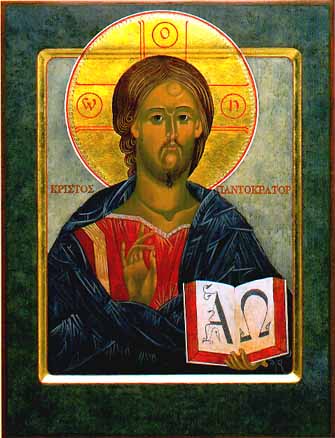
Consider the veneration of icons by Orthodox Christians. If the icons are spiritually opaque – if they are only things in themselves, made by human hands with wood and paint, and seen in this way – then the lighting of candles before them, the prostrations, the kissing is all idolatry, for it is addressed to the work of our hands, to our own creation. But, if the icons are spiritually transparent – if, as is claimed, they are windows into heaven through which to glimpse our God who is beautiful in his saints, and are seen in this way – then all the acts of veneration are truly acts of worship to the One seen through the icons.

Anything that is opaque may become an idol. Some speak of Bible-olatry, and rightly so. The Bible, if studied as any other book and considered a thing and end in itself, becomes an idol. It is, in reality, a verbal icon, a textual window through which to see God and through which to draw his people into worship. It is either this, or it is an idol. The same may be said of Liturgy or prayer or fasting or works of service. The same may be said of our children or professions or possessions or pleasures. That which is venerated – in thought, word, or deed – in opacity, is an idol.

The danger is real; so, too, is its opposite. If the opaque is subject to idolatry at one end of the continuum, it is subject to contempt or disregard at the other. Nature, for example, is creation which has been rendered spiritually opaque by materialism. It is no longer a window through which to glimpse the everlasting power and divinity of the Creator (cf Rom 1:20), but a venue and means for indulging human passions. Once we studied a transparent creation to know God; now we utilize an opaque nature to please ourselves. Or, consider the homeless man. If he is opaque to us, he is a problem to be solved, a cause to be championed, a nuisance to be ignored. Only if he is transparent to us is he the least of the brothers of our Lord, through whom we may glimpse and minister to the Lord, himself. If opaque, my job is just a job; if transparent, it is a ministry. If opaque, my wife is just my spouse, there to help me. If transparent, she is my sister in Christ for whom I will sacrifice my very life, as Christ gave his life for the church. If opaque, everything is just as it seems and I am free to worship it idolatrously or equally free to disregard it contemptuously. But, if transparent, everything is sacramental, allowing us to glimpse through it the God who is everywhere present and filling all things, to whom alone belongs glory and honor, worship and praise.

And then, there is the matter of ourselves: opaque or transparent? We were – all of us – created to be living icons of God, made in the image of God, transparent so that God’s glory might be witnessed in and through us. Christians are doubly so – transparent by nature and by vocation. When we turn from that nature and vocation, when we turn to embrace an opaque world, we lose our transparency and become opaque ourselves. The struggle – the ascesis – of the Christian life is the struggle to become transparent and to retain that transparency, to be nothing in ourselves, to say with Saint Paul, “it is no longer I who lives, but Christ in me.”

Tuesday, October 12, 2010

Salvation and Judgment


Like Jude, I have much that I wish to say about the salvation that we share; I think several posts will follow on this topic. I begin here with a re-post from October 2007 that sets out some of the fundamental notions underlying my thoughts -- and, I hope, the thoughts of the church -- on our great salvation.


I’ve always thought of hellfire-and-damnation preachers much like I think of grits and sweet, iced tea – as home grown Southern commodities. Oh, I suppose you can get all of then north of the Mason-Dixon line, but there they would be only dim shadows of the full reality we have here in Dixie. Here we have the real Brother Love.

Hot August night and when you’d almost bet
you can hear yourself sweat he walks in.
Eyes black as coal and when he lifts his face
every ear in the place is on him.
Starting soft and slow like a small earthquake,
but when he lets go, half the valley shakes.

Cause it’s Love, Brother Love,
say Brother Love’s traveling salvation show.
Pack up the babies and bring the old ladies
cause everyone goes, everyone knows it’s Brother Love’s show.

-- Neil Diamond (adapted)

I like grits: butter, salt, pepper: please, no sugar – that’s for Yankees who even put it in their cornbread! And sweet tea? Well, that’s the house wine of the South. But, other than as cultural icons – kind of like Elvis – I’m not so fond of hellfire-and-damnation preachers. They tell you with tears in their eyes and a catch in their voice just how much God loves you. Then a moment later – sometimes without missing a single breath – they stride across the stage and with red face and popping veins terrorize you with the eternal fires of hell where the flames are never quenched and the worm never dies and where God is only too pleased to send you forever if you don’t repent this very night. And this always brings the shouts of Amen! from the crowds. “Are you saved, brothers and sisters? If you leave this place and on the way home die in a terrible car wreck, do you know where you’d spend eternity?”

I’ve heard my share of these preachers. They weren’t part of my spiritual traditional directly, but I’ve heard them often enough. And I’ve known a few – genuinely good men worthy of respect. Even so, I don’t care for their preaching. And it’s not just a matter of style; I don’t care for the style, but that’s just personal preference and not important at all. It’s not the simple and unsophisticated faith they typically express that bothers me; after all, God has not chosen to use the wisdom of the world for his glory, but rather the foolishness of the cross proclaimed with simplicity and power – the very wisdom of God. No, it’s their theology; that’s the problem. I find their vision of God more than a little confusing and frankly, disturbing. God loves me and God is willing to torture me forever in the fires of hell. These two notions need a lot more reconciliation than their sermons usually provide, and really than their theology provides. And the incessant question, “Are you saved?” makes me wonder: In their theology am I being saved by God, for God, or from God? It truly begins to sound like the latter. God, who is good, is disposed – by his very goodness – to send me, wretched sinner that I am, to eternal punishment. But Jesus interposes himself between my sinfulness and God’s righteous wrath to save me from God’s vengeance. Jesus saves me from God. Can that be right? Is that really the biblical image of salvation?

Such preaching always leaves me feeling vaguely disquieted, even a bit irritated. It’s taken me a while to realize why, but I think I understand now. These preachers’ vision of God is the God of my childhood; theirs is the same, slightly schizophrenic theology that I’ve struggled to shake but haven’t quite managed to. I find it hard to love their God – easy to fear him, but hard to love him. I find it hard to believe that he loves me. I find it hard to say that their God is good in any normal sense of the word good. And yet, I find it hard to let go of that theology. I am a Western Christian, a product of the Reformation, and that is the God of the Reformation. What is left if I let go of that image – some wimpy, culture-formed god who just wants us all to get along and who embraces us all in the end? That can’t be right either. What I want is the real God. What I want is the true theology of the church – faithfully received from the Apostles and faithfully preserved in Scripture and in the faith and practice of the one, holy, catholic, and Apostolic Church. What does the church say about God’s judgment?

He will come again to judge the living and the dead. This is the unanimous testimony of the creeds, Scripture, the Fathers, and the historic church itself. And it must be our starting point: Jesus Christ will come again to judge the living and the dead. Judgment is certain. At issue is what that judgment will look like. At issue is the nature and outcome of that judgment. At issue is our very understanding of God. Perhaps that’s why, in discussing judgment with Nicodemus, Jesus starts with God.

16 ‘For God so loved the world that he gave his only Son, so that everyone who believes in him may not perish but may have eternal life.
17 ‘Indeed, God did not send the Son into the world to condemn the world, but in order that the world might be saved through him. 18Those who believe in him are not condemned; but those who do not believe are condemned already, because they have not believed in the name of the only Son of God. 19And this is the judgement, that the light has come into the world, and people loved darkness rather than light because their deeds were evil. 20For all who do evil hate the light and do not come to the light, so that their deeds may not be exposed. 21But those who do what is true come to the light, so that it may be clearly seen that their deeds have been done in God’
(John 3:16-21, NRSV).

Any discussion of judgment must be firmly rooted in this passage and must keep coming back to it as a compass continually returns to true north.* Let’s lay out the major points here and then flesh them in later.

1. God’s fundamental and unchanging disposition toward the world is love. “For God so loved the world,” means just that. This is true corporately – God loves the whole world – and individually – God loves you. Imagine yourself at your best moment, at that time when you were closest to God. He loved you then. Imagine yourself at your worst moment, at that time when you were farthest from God. He loved you then. God’s unchanging disposition toward the world is love.


2. God sent his Son into the world to save the world – the most costly rescue mission ever mounted. Let’s get this straight at the outset: we are not saved from an angry God by the sacrifice of Jesus. We are saved by the loving God and for the loving God through the sacrifice of Jesus. I think my preacher friends knows this; it’s just that their theology doesn’t give them such a good way of expressing it. It is God’s desire and intent to save the entire world – not just to pardon sinners but to restore all of creation – through his unique Son, Jesus Christ.


3. Judgment began the moment Jesus entered the world as Christ, the Messiah, because at that moment people began making decisions about their relationship with him and to him. The Magi chose to bow down in worship and sacrifice. Herod chose to rise up in rebellion and murder. Jesus’ very presence makes judgment unavoidable. And here is the irony on which everything hinges: we worry about how Jesus will judge us when, in reality, we are the ones judging Jesus.


4. The nature of judgment lies in the human response to the presence of Jesus. “19And this is the judgement, that the light has come into the world, and people loved darkness rather than light because their deeds were evil.” I read this verse and imagine roaches in a dark, filthy room scurrying for cover when the light is turned on. Jesus’ presence provokes a response and that response is a self-judgment. Not only do we judge Jesus – whether we will bow before him or rise up against him – we also judge ourselves. If we are resolutely evil – evil and beyond repentance – we will flee from his presence. If we looking for the kingdom of God – perhaps even unknowingly – we will be drawn toward the light of Christ. Our response to the presence of Jesus is the judgment for or against us, and it is ours to make.

Now let’s put some flesh on these bare bones of theology. What does this judgment look like incarnationally? As usual, Jesus tells a story.

Now all the tax collectors and sinners were coming near to listen to him. And the Pharisees and the scribes were grumbling and saying, “This fellow welcomes sinners and eats with them” (Luke 15:1-2, NRSV).

Already in these introductory verses judgment is occurring; it provides the context for the following parables. Jesus is present and people must make decisions, judgments, about their relationships to and with him. Notice that when the light of Christ shone on Israel it wasn’t the tax collectors and sinners who scurried away toward the dark nooks and crannies, but the religious elite who did so. Unrighteousness wasn’t judged harshly; self-righteousness was.

11 Then Jesus said, ‘There was a man who had two sons. 12The younger of them said to his father, “Father, give me the share of the property that will belong to me.” So he divided his property between them. 13A few days later the younger son gathered all he had and travelled to a distant country, and there he squandered his property in dissolute living. 14When he had spent everything, a severe famine took place throughout that country, and he began to be in need. 15So he went and hired himself out to one of the citizens of that country, who sent him to his fields to feed the pigs. 16He would gladly have filled himself with the pods that the pigs were eating; and no one gave him anything. 17But when he came to himself he said, “How many of my father’s hired hands have bread enough and to spare, but here I am dying of hunger! 18I will get up and go to my father, and I will say to him, ‘Father, I have sinned against heaven and before you; 19I am no longer worthy to be called your son; treat me like one of your hired hands.’ ” 20So he set off and went to his father. But while he was still far off, his father saw him and was filled with compassion; he ran and put his arms around him and kissed him. 21Then the son said to him, “Father, I have sinned against heaven and before you; I am no longer worthy to be called your son.” 22But the father said to his slaves, “Quickly, bring out a robe—the best one—and put it on him; put a ring on his finger and sandals on his feet. 23And get the fatted calf and kill it, and let us eat and celebrate; 24for this son of mine was dead and is alive again; he was lost and is found!” And they began to celebrate.
25 ‘Now his elder son was in the field; and when he came and approached the house, he heard music and dancing. 26He called one of the slaves and asked what was going on. 27He replied, “Your brother has come, and your father has killed the fatted calf, because he has got him back safe and sound.” 28Then he became angry and refused to go in. His father came out and began to plead with him. 29But he answered his father, “Listen! For all these years I have been working like a slave for you, and I have never disobeyed your command; yet you have never given me even a young goat so that I might celebrate with my friends. 30But when this son of yours came back, who has devoured your property with prostitutes, you killed the fatted calf for him!” 31Then the father said to him, “Son, you are always with me, and all that is mine is yours. 32But we had to celebrate and rejoice, because this brother of yours was dead and has come to life; he was lost and has been found”
(Luke 15:11-32, NRSV).

In this story one player remains steadfast, unchanging in his true character throughout; one player experiences radical repentance, a recreation of heart and mind; and one player is revealed for what he truly was and is.

From first to last, what is the father’s disposition toward his sons in this parable? Love. Whether the sons are near or far, rebellious or obedient, shameful or upright, the father never wavers in his love for them. His sole judgment is that he will continue to love his sons – no matter what – simply because they are his sons. God’s fundamental and unchanging disposition toward the world is love. God’s fundamental and unchanging disposition toward you is love. Are you a sinner? Well, I am and I can only suppose you are, too. But more importantly, we are children of God through our Lord Jesus Christ and we are the undeserving recipients of God’s unchanging love.

The younger son is a jerk. There’s no need to paint a rosy picture where none exists: he is unconscionably disrespectful, intolerably selfish, unimaginably arrogant, and unashamedly sinful. In short, he looks a lot like me. Until…until the light of the memory of his father’s love pierces the darkness of his despair and he comes to his senses. And this memory forces a judgment. What will be his relationship to the father? Will he return and bow humbly before him seeking hesed, loving compassion, or will he, in continued arrogance distance himself even farther from his father’s grace? Judgment began the moment the memory of the father’s love surfaced, and that judgment was in the hands and heart and mind of the prodigal son. Judgment begins for us the moment Jesus becomes present to us. Jesus’ very presence make judgment unavoidable – not that Jesus judges us, but that we judge him.

The elder son has a thin veneer of righteousness. I even believe his claims – that he had worked faithfully for his father and that he had never disobeyed – don’t you? Externally, here was the perfect son. But he didn’t have his father’s heart. He was every bit as concerned with inheritance as his younger brother had been – concerned with position and pride and importance. And when the light of the father’s love blazed openly upon the returned prodigal, it was the self-righteous elder son who scurried for the darkness of anger and selfishness. The presence of the father’s love revealed the true heart of the elder son and provoked a response of self-judgment and rejection. Our response to Jesus reveals our heart and in that revelation lies the judgment for or against us. When our hearts are opened the judgment we have made about Jesus, and therefore our judgment upon ourselves, is revealed. Perhaps this is what John recorded symbolically in the Revelation:

Then I saw a great white throne and the one who sat on it; the earth and the heaven fled from his presence, and no place was found for them. And I saw the dead, great and small, standing before the throne, and the books were opened. Also another book was opened, the book of life. And the dead were judged according to their works, as recorded in the books (Rev 20:11-12, NRSV).

And maybe that’s what Paul had in mind in his instruction to the Roman Christians.

Or do you despise the riches of his kindness and forbearance and patience? Do you not realize that God’s kindness is meant to lead you to repentance? But by your hard and impenitent heart you are storing up wrath for yourself on the day of wrath, when God’s righteous judgment will be revealed. For he will repay according to each one’s deeds: to those who by patiently doing good seek for glory and honour and immortality, he will give eternal life; while for those who are self-seeking and who obey not the truth but wickedness, there will be wrath and fury (Rom 2:4-8, NRSV).

Both John and Paul speak of the judgment as an opening, a revelation, of what a man has written in the book of his life, of what he has stored in his heart. This is not as much God’s judgment on man as it is self-judgment. Let’s see what you’ve become. Let’s see your response to the light. What is it that you really want as revealed by the storehouse of your heart? Then that is what you shall have.

He will come again to judge the living and the dead. This is the testimony of the Creed, Scripture, and the voice of the faithful for two millennia. I believe it. Each of us will be judged – will judge ourselves – based upon the totality of our lives and the totality of our response to the Lord Jesus. Did we bow down in worship or did we rise up in rebellion? Did we scurry away from the Light of the World or did we let it fill us so that we became a light for the world? Will our opened hearts reveal the Father’s love or the emptiness of man turned inward upon himself? These are the judgments we will make. These are the judgments were are even now making.

Like the hellfire-and-damnation preachers I believe God loves us. And like them I, too, am concerned with being saved, but not saved from God – rather saved by and for our loving God through the sacrifice of our Lord Jesus. In fairness, I’m sure that is what many of them mean. So, we live not in fear, but in love and expectation.

If anyone acknowledges that Jesus is the Son of God, God lives in him and he in God. And so we know and rely on the love God has for us. God is love. Whoever lives in love lives in God, and God in him. In this way, love is made complete among us so that we will have confidence on the day of judgment, because in the world we are like him (1 John 4:15-17, NIV).

He will come again to judge the living and the dead. Even so come, Lord Jesus.

Amen.


Saturday, October 9, 2010

Predestination and Eschatology


I believe in predestination – not at all as the Reformers conceived of it, but as scripture presents it in the cosmic, eschatological vision of the Apocalypse. I believe in predestination as seen in our Lord Jesus Christ, the Alpha and the Omega, in whom the blessed end is present from the beginning. I believe in predestination as revealed in the Lamb slain from the foundations of the world. I believe in predestination as visioned by Julian of Norwich: All shall be well, and all shall be well, and all manner of things shall be well.

What does it look like, this eschatological predestination?

1 Now I saw a new heaven and a new earth, for the first heaven and the first earth had passed away. Also there was no more sea. 2 Then I, John, saw the holy city, New Jerusalem, coming down out of heaven from God, prepared as a bride adorned for her husband. 3 And I heard a loud voice from heaven saying, “Behold, the tabernacle of God is with men, and He will dwell with them, and they shall be His people. God Himself will be with them and be their God. 4 And God will wipe away every tear from their eyes; there shall be no more death, nor sorrow, nor crying. There shall be no more pain, for the former things have passed away.”5 Then He who sat on the throne said, “Behold, I make all things new.” And He said to me, “Write, for these words are true and faithful.” 6 And He said to me, “It is done! I am the Alpha and the Omega, the Beginning and the End. I will give of the fountain of the water of life freely to him who thirsts. 7 He who overcomes shall inherit all things, and I will be his God and he shall be My son. 8 But the cowardly, unbelieving, abominable, murderers, sexually immoral, sorcerers, idolaters, and all liars shall have their part in the lake which burns with fire and brimstone, which is the second death” (Rev 21:1-8, NKJV).

It looks like the consummation of all things in Christ Jesus, the renewal of all things in him according to the foreknowledge and will of God. It looks like the free choice of all men honored by God: the water of life granted to those who thirsted for it and the lake of fire bequeathed to those who refused to turn from it. It looks like the Kingdom of God on earth as it is in heaven – a kingdom come in answer to the prayer Jesus taught us and made us bold to pray.

1 And he showed me a pure river of water of life, clear as crystal, proceeding from the throne of God and of the Lamb. 2 In the middle of its street, and on either side of the river, was the tree of life, which bore twelve fruits, each tree yielding its fruit every month. The leaves of the tree were for the healing of the nations. 3 And there shall be no more curse, but the throne of God and of the Lamb shall be in it, and His servants shall serve Him. 4 They shall see His face, and His name shall be on their foreheads. 5 There shall be no night there: They need no lamp nor light of the sun, for the Lord God gives them light. And they shall reign forever and ever (Rev 22:1-5, NKJV).

It looks like life and healing and purity and worship and light – the light of the glory of God in the face of Jesus, a light penetrating and transforming and finally shining from the righteous, the sons and daughters of men made sons and daughters of God. It looks like blessing.

14 Blessed are those who do His commandments, that they may have the right to the tree of life, and may enter through the gates into the city. 15 But outside are dogs and sorcerers and sexually immoral and murderers and idolaters, and whoever loves and practices a lie (Rev 22:14-15, NKJV).


It looks like – and this is where I must depart from the Reformers – invitation, not for some, but for all.

17 And the Spirit and the bride say, “Come!” And let him who hears say, “Come!” And let him who thirsts come. Whoever desires, let him take the water of life freely (Rev 22:17, NKJV).

This is the great predestination of God: that in his abundant mercy he determined from before the beginning of creation the glorious end of creation and determined to make available to all who freely come to him, freely the water of life.

So, I believe in predestination: that our sovereign God, by his sovereign choice made from before all creation, will put all things to rights, for our God is righteous; that our merciful Savior, slain from the foundations of the world, offers light and life to all men, for our God is gracious and the lover of mankind.

Our God, who spoke the first word of creation, speaks also the first word of new creation: a word predestined in the gracious will of God.

20 He who testifies to these things says, “Surely I am coming quickly.” Amen. Even so, come, Lord Jesus! 21 The grace of our Lord Jesus Christ be with you all. Amen (Rev 22:20-21, NKJV).